I Paesi europei come organizzano l’istruzione primaria, secondaria e superiore? Qual è la durata di ciascun livello di istruzione? Il progetto online di Eurydice “The structure of the European education systems” offre tutte le risposte con dati comparabili e immagini interattive, sottolineando aspetti chiave come le età di inizio e di fine per ciascun programma o la durata dell’istruzione e formazione obbligatoria a tempo pieno e a tempo parziale.
Tramite questo webtool interattivo, è possibile scoprire come sono strutturati i 39 sistemi educativi dei 37 Paesi che partecipano al programma Erasmus+. Questi sistemi possono essere complessi, ma Eurydice li rende semplici e fruibili grazie a informazioni sintetiche e comparabili. Attraverso immagini e dati dettagliati, è possibile così acquisire informazioni a partire dall’educazione e cura per la prima infanzia fino ai programmi di istruzione superiore per l’anno scolastico/accademico 2024/2025.
Eurydice è la rete europea che raccoglie, aggiorna, analizza e diffonde informazioni sulle politiche, la struttura e l’organizzazione dei sistemi educativi europei. Nata nel 1980 su iniziativa della Commissione europea, la rete è composta da un’Unità europea con sede a Bruxelles e da varie Unità nazionali. Dal 1985, l’Indire è sede dell’Unità nazionale italiana.
These ethical guidelines on AI and data usage in teaching and learning are designed to help educators understand the potential that the applications of AI and data usage can have in education and to raise awareness of the possible risks so that they are able to engage positively, critically and ethically with AI systems and exploit their full potential.
European Commission: Directorate-General for Education, Youth, Sport and Culture, Ethical guidelines on the use of artificial intelligence (AI) and data in teaching and learning for educators, Publications Office of the European Union, 2022,
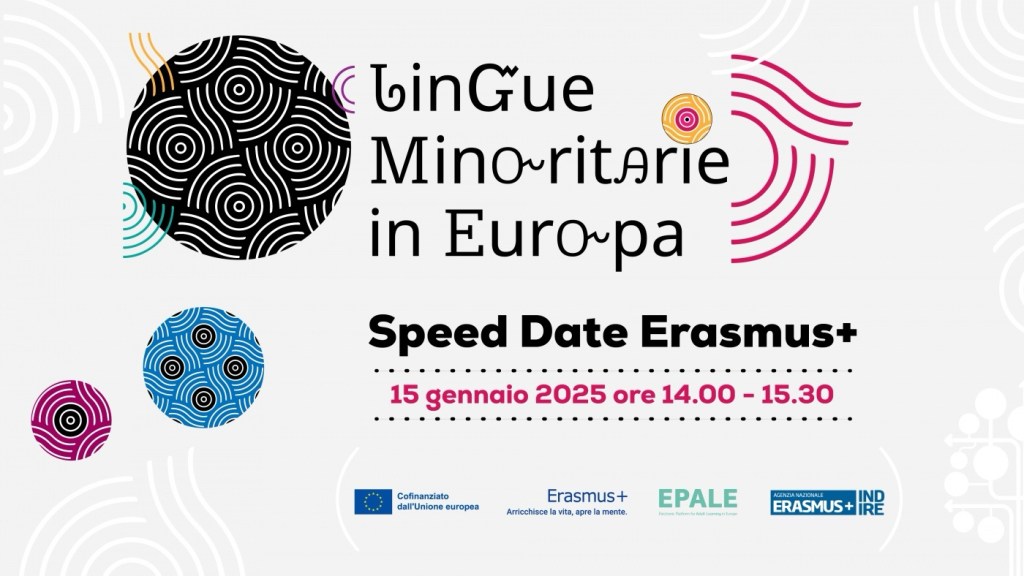
Nuovo Speed Date Erasmus+ in arrivo! Lo organizza EPALE Italia il 15 gennaio 2025 per favorire l’incontro tra organizzazioni europee che si occupano di educazione degli adulti.
Questa edizione è dedicata alle lingue minoritarie in Europa nei progetti Erasmus+. Partecipa allo Speed date online e coinvolgi i colleghi e i discenti della tua organizzazione.
Lingue minoritarie, perché?
La diversità linguistica è un carattere comune a tutti i ventisette Stati membri dell’Unione europea nella quale circa sessanta milioni i cittadini hanno come lingua propria una lingua minoritaria. Per lingua minoritaria si intende una lingua «diversa da quella/e ufficiale/i di uno Stato e dai suoi/loro dialetti (…) tradizionalmente usata in un dato territorio di uno Stato da cittadini dello stesso che formano un gruppo numericamente inferiore rispetto al resto della popolazione» (Carta europea delle lingue regionali o minoritarie, 1992).
Le lingue rappresentano un patrimonio culturale dell’umanità di inestimabile valore. Tutelare e sostenere quelle minoritarie significa garantire parità di diritti per tutti i cittadini, prevenire situazioni di conflitto e marginalizzazione, promuovere e sostenere l’inclusione sociale. Lo Speed Date incoraggia la creazione di partenariati Erasmus+ in questo ambito.
Conosci lo Speed Dating?
Letteralmente “appuntamento veloce” lo speed dating rappresenta una serie di appuntamenti veloci della durata di pochi minuti ciascuno, in cui tante persone sconosciute si ritrovano per conoscersi. Questo gioco è molto efficace nel favorire la nascita di nuove relazioni, nel nostro caso lavorative! I pochi minuti che si hanno a disposizione per presentare sé stessi e la propria organizzazione e/o idea di progetto sono sicuramente un buon inizio per capire se la persona che abbiamo di fronte può essere un buon partner con cui iniziare un progetto Erasmus+ oppure presso il quale effettuare una mobilità. Se questa prima impressione è positiva i partecipanti avranno modo di continuare il lavoro in autonomia.
Chi può partecipare e quali sono i requisiti richiesti?•
Chi è interessato a presentare un progetto Erasmus+ a una delle prossime scadenze 2025
Chi ha già un progetto in corso sul tema delle lingue minoritarie ma ha difficoltà a trovare delle organizzazioni presso le quali effettuare la mobilità
La lingua di lavoro è l’inglese. È pertanto necessaria una conoscenza della lingua inglese sufficiente ad intrattenere una conversazione.
Come si partecipa?
Iscriviti all’evento contattando epale@indire.it entro il 13 gennaio 2025
Renditi visibile in Epale! Se non se già iscritto, crea il tuo account e registra la tua organizzazione in piattaforma (tempo stimato 5 minuti)
With the launch of the 2025 call for proposals, it is a good time to (re)explore the EPALE MOOC Erasmus+ Funding Opportunities for Adult Education Providers. The refreshed course provides a timely introduction to the Erasmus+ programme (2021-2027), equipping you with the knowledge and tools to successfully navigate funding applications.
The MOOC has been updated to include the latest timelines, practical guidance, and resources to help you prepare a competitive proposal. We designed it to be as accessible as possible, so the course offers an in-depth exploration of Key Action 1 (KA1) and Key Action 2 (KA2) opportunities through different media, like video lessons as well as infographics and gifs. This way, it gives you easy access to the information and hopefully helps to decide which part of the content the most crucial is for you and your work. The course also provides essential tips for managing communication with National Agencies and understanding the application and evaluation processes.
The MOOC is structured into eight concise lessons that are available for free on the EU Academy platform. Whether you are using a laptop, tablet, or smartphone, the MOOC allows you to learn at your own pace and convenience.
If you are an adult education provider looking into Erasmus+ funding for your organisation, this is your opportunity to take the first step.
We increasingly engage with texts that draw meaning beyond written words from other sources. Images, sound, video clips and gestures (alone and in combination) all play central roles in how we communicate and interpret content.
This multimedia approach is especially evident in online platforms and social media, where a single piece of content may blend written language with videos, graphics, photos and other visual elements. This change requires us to rethink what we mean by literacy.
What literacy skills do our students need to navigate rich and diverse texts?
Nearly 30 years ago, a group of scholars, the New London Group, recognised the need for a broader understanding of literacy after observing a growing gap between the literacy needs students faced outside of school and the print-based practices still dominant in classrooms.
They introduced a concept of multiliteracieswhich acknowledges that we now engage with texts that use multiple modes of communication. We engage with these texts in different media environments, each with their own practices and strategies.
The concept incorporates the literacy skills needed to acquire, interpret, produce and evaluate the multimodal and multimedia texts we encounter today.
For literacy education, this shift means updating classroom aims, content and activities. The group developed a pedagogical framework to help schools respond to the growing inequalities and rapid changes in technology and the textual landscape.
The process starts with examining pupils’ everyday literacy practices and experiences together. Then these practices are approached analytically by introducing a metalanguage for discussing the resources they use to create meaning. Students can use this metalanguage to critically evaluate their literacy practices which helps them understand how different modes of communication work and how to use them effectively.
The pedagogy of multiliteracies also emphasises the design and production of multimodal texts and collaborative learning in linguistically and culturally diverse groups, rather than individual reading activities.
Why is teaching multiliteracies important?
The latest PISA results showed an alarming downward trend in reading literacy. Should we not focus on traditional literacy as key basic skills? Not exclusively, for the reasons indicated below.
Schools help pupils develop the skills they need inside and outside of school. Pupils should be able to produce and analyse multimodal texts in different situations, preparing them to work in variety of fields.
Engaging pupils with designing multimodal texts is motivating and provides opportunities to be creative.
Designing and producing texts makes the conventions, possibilities and constraints of different modes and meaning visible. Pupils can only critically evaluate practices they fully understand.
Teaching multiliteracies does not exclude traditional literacies; however, it is time to expand our definition of basic skills. In the 21st century, literacy includes not only reading, writing and numeracy, but also the ability to navigate, create and interpret multimodal texts.
Multiliteracies are already included in many European curricula, and the European framework for key competencies for lifelong learning defines literacy in a way that aligns with the concept of multiliteracies. These policy documents and guidelines provide a foundation for integrating multiliteracies into literacy education.
Yet, research shows that there is still work to be done to incorporate teaching multimodal literacy practices into mainstream literacy education. While many teachers do include multimodal texts in their classroom activities, tensions between multimodal and traditional practices still exist.
Studies point out the huge challenges teachers face when they adapt their teaching to the redefined literacies, and there are concerns about teachers’ preparedness to teach multiliteracies. They need support with training and appropriate materials. Teacher educators and policy makers must ensure that teachers have substantial and concrete support.


 Italianistica, Didattica Innovativa, Internazionalizzazione