School-community collaboration is generally considered beneficial, but it can be especially effective and rewarding when it comes to education for sustainability.
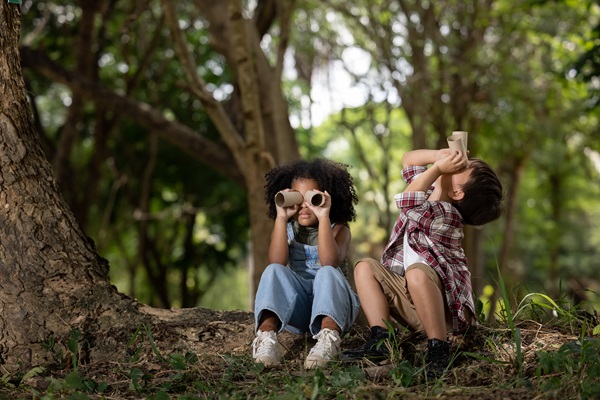
Phimwilai / Adobe Stock
In our survey on sustainability, 38% of respondents indicated that their schools have partnerships with local environmental organisations or businesses, and 19% replied that a lack of these partnerships affects teaching sustainability in schools.
The types of partner organisations can differ greatly, depending on a school’s context and resources. However, benefits can be seen in three areas as indicated below.
Educational – community-based learning can enrich teaching, for example through field trips or having guest speakers visit the school. Hands-on learning experiences in their local area help pupils better understand environmental issues.
Social – increased communication, collaboration skills and community engagement are important outcomes of sustainability partnerships. They also improve pupil wellbeing, intergenerational understanding and collective knowledge sharing.
Environment – partnerships can support circular economies, the protection and improvement of local nature areas and green spaces, and foster an understanding of the importance of protecting and preserving the environment.
On the other hand, schools must be cautious of some challenges – including greenwashing, limited teacher numbers and pressure on resources – that can undermine sustainability initiatives. Above all, schools must ensure that all collaborators share the same objectives.
A 2024 Eurydice study on Learning for sustainability in Europe found that 18 (out of 39) European education systems provide some form of support for schools to work with organisations in their local or wider community. The most commonly supported type of cooperation is with NGOs and public authorities; projects that involve engagement with parents and families have less support.
Programmes and projects that foster school-community partnership
The Eco-Schools programme promotes hands-on, participatory learning experiences that focus on real-world environmental issues. In one of the programme’s schools in Spain, a study on local contamination took pupils to the local water treatment plant to seek information from local authorities and they later distributed their findings to local business and homes.
Similarly, the Bavarian Climate school initiative emphasises the importance of local partnerships, including field trips, events and collaboration with local companies.
The EU-funded MOST project aims to improve science education by fostering partnerships between schools and communities. It has produced a manual for school-community projectsthat explains the five steps of a participatory project: invite, co-create, act, share and evaluate.
Additional information
Education type:School Education
Target audience:Teacher Student Teacher Head Teacher / Principal Teacher Educator Government staff / policy maker Other
È disponibile in open access, edito da Pensa Multimedia, il volume scientifico A cosa serve la ricerca educativa? Il dato e il suo valore sociale, che raccoglie gli Atti del Convegno SIRD (Società Italiana di Ricerca Didattica), svolto a Milano il 21-22 settembre 2023.
Il volume curato dalla Prof.ssa Renata Vigano e dalla Prof.ssa Cristina Lisimberti accoglie i contributi scientifici dei ricercatori della Rete delle Piccole Scuole, valorizzando differenti metodi di ricerca.
Il primo contributo di Giuseppina Cannella e Giuseppina Rita Jose Mangione (INDIRE) L’ecosistema di una scuola in ricerca, promuove una riflessione su come la dimensione della Rete sostenga e si nutra di una postura di tipo research engaged delle scuole che vi aderiscono. INDIRE, guardando alla scuola come soggetto attivo dei processi di ricerca (research engaged schools) che opera nel sistema istituzionale, individua differenti “livelli” di una scuola “research engaged” :
capacità di promuovere un approccio pedagogico research rich (pedagogy) nella pratica didattica in classe (Microsistema);
capacità di trasporre le research orientation nella visione di scuola e nei valori culturali della proposta educativa (Macrosistema);
capacità di promuovere una research community sia a livello di contesto scolastico che tra la singola istituzione e il territorio (Mesosistema);
assumere un approccio di ricerca nelle politiche e nelle pratiche scolastiche (Esosistema) generalmente indicato nell’atto di indirizzo di una scuola. Il lavoro propone una chiave per rileggere l’atteggiamento research engaged di una piccola scuola applicando gli indicatori del livello “Macrosistema” rintracciando gli elementi chiave per estendere una comprensione della postura in ricerca tra quelle realtà che da anni prendono parte alle Reti di innovazione di INDIRE.
Il secondo contributo a cura di Giuseppina Rita Jose Mangione(INDIRE) insieme a Michelle Pieri(Università di Trieste) e Stefano Cacciamani (Università della Valle D’Aosta), dal titolo L’uso del Design Based Research per lo sviluppo di modelli didattici innovativi nelle scuole piccole e rurali. Il caso di “Classi in rete”, pone attenzione a come la ricerca educativa che si occupa di scuole piccole e rurali abbia dedicato una crescente attenzione cercando di comprenderne le caratteristiche, i problemi e le potenzialità, ma anche di progettare e valutare interventi in grado di migliorare anche attraverso l’uso delle tecnologie la qualità dell’istruzione e a promuovere lo sviluppo locale. Tra gli approcci metodologici utilizzati in questo ambito, il Design Based Research, rispondendo alla critica del metodo sperimentale in ambito educativo permettendo di: integrare la ricerca e la progettazione di soluzioni educative al fine di testare soluzioni (chiamate “interventi”) ai problemi educativi; generare teorie che possano spiegare e migliorare i processi di insegnamento e apprendimento; di generare innovazione e cambiamento delle persone e dei sistemi coinvolti.
Il lavoro presenta l’applicazione del DBR nel contesto delle piccole scuole italiane. In particolare viene descritta la progettazione, attraverso la tecnica del Conjecture Mapping, del modello “Classi in rete”, messo a punto per affrontare il problema dell’isolamento sociale e culturale delle classi remote. Verrà quindi proposta l’analisi dei risultati ottenuti dalla sua prima implementazione nelle scuole delle aree interne della Regione Abruzzo e verranno infine presentate le indicazioni di cambiamento del modello per la progettazione del secondo ciclo di sperimentazione attualmente in corso nella Regione Liguria.
La rivista BRICKS è in free download. Pierfranco Ravotto ha segnalato oggi in FB, dal numero 03 – 2024 “L’intelligenza artificiale nella scuola al servizio della creatività, della personalizzazione e dell’inclusione”, l’articolo di Giovanna Giannone Rendo,Federica Longo e Giovanni Silvestro.
Giovanna Giannone, Federica Longo e Giovanni Silvestro hanno sperimentato un percorso che integra l’Intelligenza Artificiale con pratiche di Social Emotional Learning (SEL).
La sperimentazione è stata svolta nell’insegnamento dell’Educazione Civica, sia in scuole secondarie di primo grado che di secondo grado.
Dopo una prima attività coinvolgente che ha permesso una Sentiment Analysis di canzoni vicine al mondo degli adolescenti, gli alunni hanno acquisito le competenze per cercare informazioni in modo veloce e attendibile con una nuova strategia creata appositamente.
Per concludere i gruppi hanno addestrato ChatBot in grado di riflettere sulle emozioni complesse che caratterizzano la crescita emotiva in età adolescenziale.
Congratulations to the winners of the eTwinning European prizes 2024.
We are delighted to present you with the list of the winners of the five age categories, out of 1284 projects submitted. These projects are great examples of collaborative work and demonstrated excellent achievements.
This winning project took an interdisciplinary approach, combining subjects from art to science. It reflected a strong collaboration between partners, incorporating the abilities and interests of the young learners.
This project aimed to raise awareness in the participant school communities about social and environmental problems in their areas. Their goal was to enrich the cognitive and social well-being of their pupils, who engaged in activities that effectively incorporated different stakeholders.
This winning project, built around the journey of a little octopus called eTwinfish, aimed to raise awareness about inclusion, empathy, knowledge and peer relationships. It encouraged discussion about topics related to environmental pollution, and fostered collaborative learning processes in school teams, including peer tutoring and role play.
This project focused on first aid skills and sustainability knowledge. It connected activities and methodologies that enhance pupil autonomy and decision-making.
In this winning project, pupils collaborated across borders on topics linked to Life Below Water, the UN Sustainable Development Goal 14, using a variety of tools to create educational games on marine themes. They engaged stakeholders through interviews and advocacy, producing impactful outcomes including a journey-themed video.
In this project, pupils chose the topics they wanted to work on and participated in collaborative activities, including creating engaging podcasts covering various interests, including music and sports.
In this winning project, game-based teaching methods were used to teach mathematics. The pupils first worked in national teams to each create a part of a large digital escape game and then, in mixed international teams, they solved the game’s crime by deciphering the mathematical clues. At the end, they created a common encryption method with a mathematical algorithm.
In this cross-border project, pupils from France and Spain collaborated, using their partner’s language. Pupils acted as mentors and helped their peers to practice the other language by co-writing a fictional travel diary. They collaborated in bilateral meetings and in the online forums.
This IVET topic set the stage for a strong collaboration between participating schools through online meetings and shared teacher support materials to talk about misconceptions related to the belief that synthetic chemicals are more harmful than natural ones.
Get to know the award-winning projects by accessing their TwinSpaces – stay tuned for the prize ceremony in September!
Education can play a vital role in enabling young people to understand and acquire the knowledge, skills and attitudes to address the global challenges that they will increasingly face during their lives.
Shutter DIN / Adobe Stock
Education for sustainability tackles issues such as climate change, sustainable transportation, cultural preservation and features increasingly in national and EU level education policies and actions.
The 2022 Council Recommendation encourages the inclusion of ‘learning for the green transition and sustainable development as one of the priority areas in education and training policies and programmes.’
GreenComp, the European sustainability competence framework, aims to equip both educators and learners with the knowledge, skills and attitudes needed to live more sustainably through changing patterns of consumption and production, by embracing healthier lifestyles, and contributing to a more sustainable economy and society.
The survey gathered 863 responses from platform visitors, most of whom were primary and secondary school teachers from Italy, Spain, Türkiye and Romania.
Which of the following best describes your role?
Teacher – early years education
Teacher – primary education
Teacher – secondary education
Teacher – vocational education
School head
National, regional or local authority
Teacher educator/trainer
Education policymaker
Parent
In-school support (e.g. school librarian, career counsellor)
External practitioner (visiting schools)
Other educational professional/stakeholder
1 – To what extent do you agree or disagree with the following statements regarding education for sustainability in your school or a school you know?
A significant majority of respondents consider that education for sustainability fosters values such as responsibility, stewardship and resilience (88%), and addresses issues beyond climate change (81%). Most agreed that education for sustainability encourages community engagement and collaboration (79%), and promotes discussions about social justice and equity (78%).
For most respondents, education for sustainability is integrated into extracurricular activities and projects (75%), the curriculum (61%, mainly in a cross-curricula way) and the school’s development plan (74%). Nevertheless, a significant proportion of respondents (45%) felt that it is inadequately or ineffectively covered in lessons.
A. Totally agree / B. Agree / C. Neither agree nor disagree / D. Disagree / E. Totally disagree / F. I don’t know
Sustainability education…
is already an integral part of the curriculum.
is integrated into extracurricular activities and projects.
is part of school’s development plan and vision for the future.
is inadequately or ineffectively covered in lessons.
is taught in a cross-curricular way.
promotes discussions about social justice and equity.
addresses global challenges beyond climate change (e.g. social inequality or food security).
fosters values such as responsibility, stewardship and resilience.
encourages collaboration with the local community.
2 – Thinking of your school or a school you know, select all options that the school provides for promoting sustainability through the curriculum and extra-curricular activities.
The main ways that sustainability is included in the curriculum and extra-curricular activities are through field trips and outdoor activities related to environmental conservation and sustainability (73%). Projects and assignments across diverse subjects (71%) and/or cross-curricular integration (51%) are other popular means.
Respondents’ schools also have teacher-led environmental education clubs or activities (47%), or guest lectures or workshops by sustainability experts (45%). The two least frequently reported ways are pupil-led initiatives or clubs (24%) and assessment of pupils’ sustainability competence (15%).
Field trips or outdoor activities related to environmental conservation and sustainability.
Projects or assignments that focus on sustainability issues across various subjects.
Incorporating elements from science, social studies, economics and other subjects.
Teacher-led environmental education clubs or activities.
Guest lectures or workshops by sustainability experts.
A nominated teacher/taskforce coordinating sustainability issues.
Opportunities for community service or volunteering related to sustainability.
Dedicated sustainability courses or modules integrated into the curriculum.
Pupil-led initiatives or clubs addressing local or global sustainability issues.
Assessing pupils’ sustainability competence (e.g. based on GreenComp).
3 – Thinking of your school or a school you know, select all sustainability measures that it has implemented.
Regarding the sustainability measures implemented in schools, the survey revealed that recycling (83%), tree planting (54%) and community gardens or other green space initiatives (52%) are the most prominent ones. Additionally, measures like reducing single-use plastics, collaborating with local environmental organisations or businesses, and promoting sustainability though taskforces/councils of teachers and/or students were moderately used (responses ranging from 35% to 44%).
Less frequent measures opted by schools were sustainable transportation options/campaigns (30%), energy conservation projects (28%) and sustainable food options in the school cafeteria (28%).
Recycling of paper, plastic, glass and other materials.
Tree planting, rewilding or reforestation projects.
Community garden or green space initiatives.
Reduction of single-use plastics on campus.
Partnerships with local environmental organisations or businesses.
Taskforce/council of teachers and/or students to promote sustainability.
Informing and engaging parents regarding sustainability.
Composting initiatives for food waste.
Sustainable transportation options/campaigns for pupils and staff (e.g. biking, walking).
Energy conservation projects or programmes, e.g. net zero plans.
Sustainable food options in the school cafeteria, e.g. organically or locally produced
4 – In your view, what are the main challenges that affect the teaching of sustainability in schools?
Survey responses indicate that the main challenges affecting sustainability teaching in schools are lack of time (54%), prioritisation of other academic subjects over sustainability education (50%) and insufficient guidance or suitable teaching resources (38%).
Insufficient support from school leadership (15%), teachers’ prejudices and pre-conceptions (14%) and a lack of confidence in teaching sustainability (11%) were indicated as challenges by far fewer respondents.
Not enough time.
Prioritisations of other academic subjects over sustainability education.
Insufficient guidance or suitable teaching resources.
Teachers’ lack of interest.
Lack of initial teacher education on sustainability topics.
Lack of a formal requirement to teach sustainability.
Lack of professional development opportunities for teachers on sustainability topics.
Difficulty in assessing pupils’ sustainability competence.
Parents’ prejudices and pre-conceptions.
Lack of collaboration and partnerships with external organisations/experts.
Inconsistent or insufficient support from school leadership.
Teachers’ prejudices and pre-conceptions.
Lack of confidence in teaching sustainability concepts and topics.
5 – In your view, which strategies can best help make education for sustainability more effective?
Regarding the strategies to make education for sustainability more effective, the responses indicate a preference for hands-on activities (54%), and field trips and volunteering at eco-friendly sites (51%). These are followed by collaboration with local community members/organisations and the provision of resources and support for teachers to integrate sustainability into their lesson plans (both 43%).
Debates, educational apps/software and virtual simulations were least mentioned as effective strategies (responses ranging from 9% to 15%).
Hands-on activities like gardening, recycling or energy projects.
Field trips or volunteer work at eco-friendly sites or sustainability-focused organisations.
Collaborating with local community members or organisations on sustainability initiatives.
Resources and support for teachers to integrate sustainability into their lesson plans.
Research/science projects with pupils to solve real local sustainability issues.
Interdisciplinary courses specifically focused on sustainability.
Professional development for teachers on sustainability topics.
Virtual exchanges (e.g. eTwinning projects) with pupils from different countries.
Organising debates to discuss and propose solutions to sustainability-related policy issues.
Using educational apps or software that focus on sustainability education
Virtual simulations or interactive learning experiences using online platforms and tools.
Main takeaways
The survey reveals strong support for education for sustainability. It not only fosters values such as responsibility, stewardship and resilience, but also encourages broader action beyond tackling climate change. As such it has a pivotal role in strengthening the development of environmentally conscious citizens.
Moreover, the emphasis on community engagement, cross-curricular integration and the inclusion of sustainability in school development plans shows that schools take a holistic approach to embedding sustainability principles in educational practices.
Education for sustainability can support multidisciplinary approaches involving field visits and project work. Respondents’ schools encourage recycling, tree planting, green space initiatives, and to some extent, reducing the use of plastics.
However, there are certain weaknesses and challenges such as inadequate or ineffective coverage of the topic in lessons, time constraints, competing academic priorities, and a lack of guidance and resources. Developing the competences set out in GreenComp can be achieved by addressing these challenges and strengthening the effective strategies identified.







 Italianistica, Didattica Innovativa, Internazionalizzazione