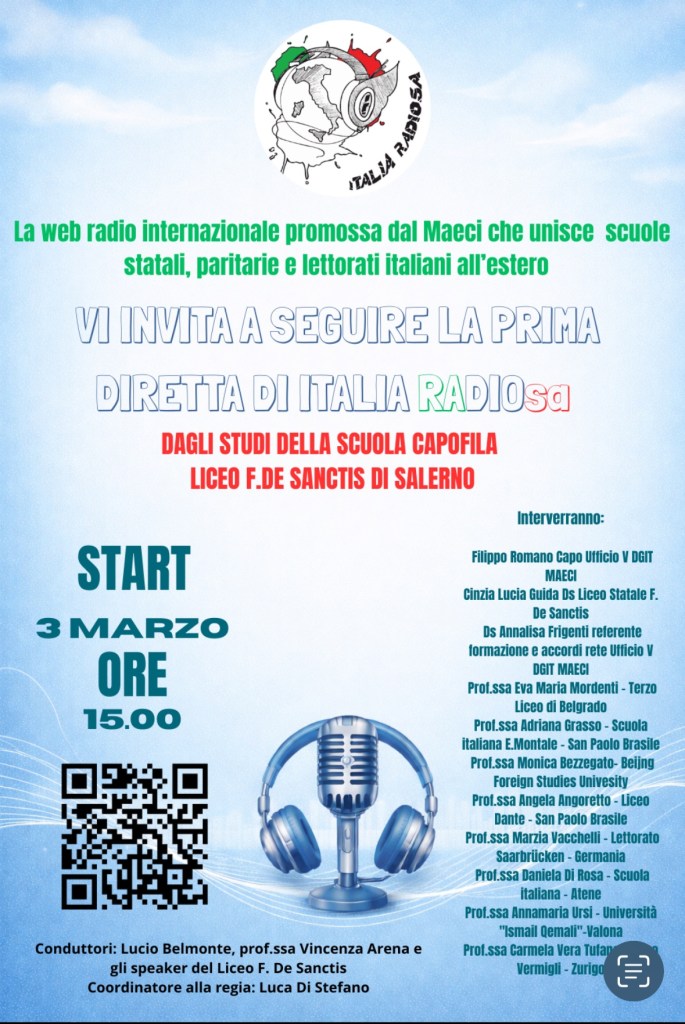
https://my.radiolink.app/italiaradiosa/ è il link per ascoltare la diretta del 3 marzo 2026 dagli studi della scuola capofila Liceo F.De Sanctis di Salerno.
Unica università tedesca rappresentata il 3 marzo è l’Universität des Saarlandes. La lettrice MAECI Marzia Vacchelli descrive le maggiori sfide che si incontrano nell’insegnamento della lingua e della cultura italiana in un contesto accademico tedesco e invita i due studenti Marco Scognamiglio e Anna Tischer a presentare la loro esperienza di apprendimento, il progetto LEI, il Centro di Studi Italiani, la rivista studentesca “Polifonia Italiana”.
La web radio ITALIA RADIOsa è uno spazio dinamico e interattivo, in cui studenti e docenti collaborano alla creazione di contenuti su tematiche quali letteratura, musica, arte, cinema, storia e cucina, esplorando il mondo del giornalismo e della produzione audio e contribuendo alla diffusione della lingua e della cultura italiana nel mondo. I partecipanti hanno dunque l’opportunità di affinare le loro capacità creative e comunicative e acquisire importanti competenze interpersonali e relazionali.
Home » News » Erasmus+ e partecipazione democratica: alcune risorse a sostegno dell’impegno civico nei progetti
La priorità “Partecipazione alla vita democratica, Valori europei e impegno civico” nei progetti Erasmus+ si lega alla consapevolezza civica, il senso di appartenenza ai valori dell’UE e l’identità europea dei cittadini. Rappresenta un tema centrale per affrontare alcune delle sfide chiave del futuro dell’Europa, in un momento storico di basso interesse delle persone nei confronti della politica e delle istituzioni, come dimostrano la crescente astensione alle consultazioni elettorali e la ridotta partecipazione ad altre forme di coinvolgimento civico tradizionale.
In questo contesto, diventa fondamentale promuovere percorsi educativi e partecipativi nei progetti di cooperazione Erasmus+ Azione Chiave 2, al fine di rafforzare il senso critico, la fiducia nelle istituzioni democratiche e la capacità dei cittadini, in particolare dei giovani, di incidere attivamente nei processi decisionali. Incentivare la partecipazione significa non solo contrastare l’apatia e la disaffezione, ma anche far conoscere e favorire le nuove forme di partecipazione democratica disponibili, come le iniziative dei cittadini europei, le piattaforme di e-democracy e gli agorà digitali, in modo da sostenere una cittadinanza attiva e consapevole.
La Partecipazione attiva può e deve essere promossa anche attraverso i progetti di Azione chiave 1 per lo studio e il lavoro all’estero – Mobilità individuale ai fini dell’apprendimento. Sono progetti importanti perché rendono i cittadini partecipi nella creazione del proprio contesto urbano, e sociale. Questo permette di ottenere soluzioni più inclusive, sostenibili e condivise.
II dati ufficiali, a cinque anni dall’avvio del Programma, segnalano che in Italia la priorità Partecipazione alla vita democratica resta la meno frequente nelle candidature per i progetti di cooperazione Erasmus+ Azione Chiave 2,indipendentemente dagli ambiti educativi. Nel complesso e in media tra i quattro settori educativi (vedi sotto) questa priorità è stata scelta come tematica principale solo in 11 casi su 100.
Ma perché lavorare su questi temi a scuola, all’università, nei centri di formazione professionale e in tutti gli altri i contesti educativi, formali e non formali, può essere interessante e utile nell’ambito di un progetto Erasmus+? Quali possono essere i vantaggi?
Una risposta arriva dall’ultimo video realizzato da SALTO Participation and Information, il centro risorse europeo della rete SALTO-YOUTH che supporta Eramus+ e il Corpo europeo di Solidarietà, al fine di promuovere la partecipazione democratica, l’impegno civico, l’alfabetizzazione mediatica e la cittadinanza attiva tra i giovani in Europa. Il centro coordina anche la Rete europea dei Participation officer Erasmus+ ed ECS, un network nato nel 2024 e composto dallo staff di 35 Agenzie nazionali Erasmus+ presenti in 23 paesi europei.
I Participation officersono figure presenti in tutte le Agenzie Erasmus allo scopo di implementare le strategie europee sul tema, organizzare eventi che promuovono le priorità, raccogliere e condividere buone pratiche di progetti, e diffondere le risorse e le iniziative Erasmus+ disponibili sulla priorità.
SALTO Participation and Information e la rete degli officer
L’idea alla base della Rete Participation network è promuovere in modo concreto e strutturato contenuti legati alla democrazia, l’impegno civico e i valori europei nei progetti Erasmus+ e Youth; a sostegno di proposte progettuali con una dimensione formativa che aiuti a comprendere perché la partecipazione attiva e democratica non sia solo un valore, ma una componente vitale per le comunità.
I Participation contact point della rete europea – foto di SALTO Participation and Information
In Italia nelle Agenzie Erasmus+ INDIRE (scuola, università ed educazione degli adulti) e INAPP (formazione professionale) sono state designate Participation’s contact point:
Elena Maddalena, Agenzia Nazionale Erasmus+ INDIRE (settori scuola, università ed educazione degli adulti) e.maddalena@indire.it
Le risorse del progetto LTA PEACE+ a supporto delle candidature Azione Chiave 1 e 2
In questo sito sono disponibili inoltre alcune risorse specifiche sulla priorità, che possono inspirare le nuove candidature e al contempo offrire materiali da utilizzare per le finalità educativo/formative durante le attività dei nuovi progetti.
È il caso delle risorse online sviluppate nell’ambito della Long Term ActivityPEACE+, un progetto che vede coinvolte oltre 20 Agenzie nazionali Erasmus+ fino al 2027. Coordinato da INDIRE e con l’Agenzia INAPP tra i partner, PEACE+ mira a rafforzare le sinergie tra i network di Alumni, Ambasciatori Erasmus+.
Gli obiettivi sono promuovere la comprensione dei valori europei, far conoscere i vantaggi dell’appartenenza all’UE e stimolare un maggiore impegno civico e partecipazione democratica tra i giovani. Il progetto prevede lo sviluppo di moduli formativi, attività di comunicazione e divulgazione, nonché iniziative di ricerca scientifica sui temi dell’impegno civico. Tra le risorse già disponibili online si segnalano:
la video serie “Participate in Europe” con moduli didattici online e gratuitiper diffondere conoscenze sulla partecipazione democratica, le istituzioni europee, il processo di integrazione e molti altri temi, trattati in relazione alla mobilità internazionale e al Programma Erasmus+.
L’invito si rivolge quindi a tutte le organizzazioni interessate a considerare questa tematica nelle candidature Azione Chiave 1 e 2 in vista delle prossime scadenze, contribuendo così allo sviluppo di progetti che non solo possono mobilitare giovani e adulti, ma anche metterli in relazione in modo consapevole e proattivo con il contesto civico e democratico europeo.
di Elena Maddalena, Erasmus+ INDIRE e Franca Fiacco, Erasmus+ INAPP
La formazione, curata e condotta dallo staff dell’Unità nazionale eTwinning Italia, che potrà avvalersi della collaborazione di alcuni Ambasciatori e/o docenti esperti, viene realizzata sulla piattaforma Moodle.
Caratteristiche del corso
Durata complessiva: 15 ore
Modalità: completamente autonoma e asincrona, su piattaforma Moodle
Flessibilità: puoi organizzare la fruizione del corso in base ai tuoi tempi ed esigenze (salvo prove intermedie e finali che necessitano della valutazione dei tutor per progredire)
Periodo massimo di svolgimento:3 mesi circa
Posti disponibili: fino a 1000 iscritti per ciascuna edizione
Il percorso si conclude con l’emissione di un attestato di partecipazione nominativo, previa conclusione di tutte le attività previste. Chi non avrà completato con successo tutte le attività entro la chiusura prestabilita non potrà ottenere l’attestato finale e perderà il pregresso effettuato fino a quel momento. Sarà comunque possibile iscriversi all’edizione successiva, iniziando il corso da capo.
Per partecipare
Edizione primavera 2026
Il corso si svolgerà da venerdì 20 marzo a lunedì 22 giugno 2026. Ai fini dell’eventuale ottenimento dell’attestato di partecipazione, le attività dovranno essere concluse entro e non oltre il 22 giugno 2026.
👉 Iscrizioni aperte fino a lunedì 2 marzo 2026 alle ore 12:00 (CET) Per partecipare è necessario compilare il modulo disponibile al seguente link: >> CLICCA QUI
Edizione autunno 2026
Il corso si svolgerà da venerdì 18 settembre a lunedì 21 dicembre 2026. Ai fini dell’eventuale ottenimento dell’attestato di partecipazione, le attività dovranno essere concluse entro e non oltre il 21 dicembre 2026.
👉 Per questa edizione le iscrizioni saranno aperte a inizio settembre 2026. Maggiori informazioni e il link al modulo saranno pubblicati nella sezione Corsi online di base del sito nazionale.
IMPORTANTE! Gli iscritti ammessi a partecipare riceveranno via e-mail istruzioni per accedere al corso poco prima dell’inizio del corso stesso. Vi preghiamo di monitorare la casella di posta (inclusa la spam) dell’indirizzo e-mail fornito in fase di iscrizione.
Che tu stia cercando partner per i tuoi progetti o desideri partecipare più attivamente alla community, il corso ti fornirà tutte le conoscenze necessarie. Unisciti a noi per sfruttare al meglio le opportunità offerte da eTwinning e per arricchire il tuo profilo professionale esplorando nuove modalità di didattica collaborativa a livello europeo.
📧 Per ulteriori informazioni o dubbi: corso.etwinning@indire.it
Seminario tematico internazionale TCA “Collaborating for Inclusion: Best Practices for Erasmus+ Adult EducationMobilities Involving Learners with Disabilities” Dublino, Irlanda, 23-27 marzo 2026
Scadenza candidature: 8 Febbraio 2026
Settori interessati: Educazione degli Adulti
L’Agenzia nazionale Erasmus+ Indire seleziona unpartecipante residente in Italia per il seminario TCA “Collaborating for Inclusion: Best Practices for Erasmus+ Adult Education Mobilities Involving Learners with Disabilities” che si svolgerà a Dublino, Irlanda, 23-27 marzo 2026, organizzato dall’Agenzia nazionale Erasmus+ irlandese (IE01 – Léargas).
Tematiche e obiettivi dell’evento
Questo seminario di contatto transnazionale ha l’obiettivo di favorire l’inclusione delle persone con disabilità nel settore dell’Educazione degli Adulti, attraverso lo sviluppo di programmi di apprendimento formale, non formale e informale e l’utilizzo delle opportunità di mobilità Erasmus+.
Il seminario offrirà conoscenze teoriche e pratiche, nonché esperienze concrete su come rendere l’Educazione degli Adulti più accessibile inclusiva e orientata ai bisogni dei discenti con disabilità.
Inoltre, verrà fornita una panoramica delle opportunità Erasmus+ per la mobilità dello staff e dei discenti, incoraggiando i partecipanti a condividere pratiche inclusive, strumenti di accessibilità e strategie organizzative efficaci.
Il seminario si focalizzerà sulla costruzione di reti e partenariati, sia di cooperazione che di piccola scala, con l’obiettivo di sviluppare proposte progettuali congiunte incentrate sull’inclusione delle persone con disabilità. Il percorso sarà guidato da formatori esperti nel campo dell’inclusione, dei diritti delle persone con disabilità e all’educazione non formale, che accompagneranno i partecipanti attraverso sessioni interattive e momenti di confronto.
Risultati attesi
Al termine di questo seminario di contatto, i partecipanti avranno:
Acquisito una comprensione chiara e approfondita delle opportunità offerte dal programma Erasmus+ per le organizzazioni di educazione degli adulti che lavorano con discenti con disabilità.
Stabilito nuovi contatti e potenziali partenariati, utili per sviluppare future candidature progettuali nell’ambito dell’inclusione e della disabilità.
Rafforzato le proprie competenze e capacità organizzative per avviare attività di mobilità inclusive e accessibili, nonché collaborazioni transnazionali sostenute dai finanziamenti Erasmus+.
Informazioni pratiche
Luogo: Dublino, Irlanda Data: 23-27 marzo 2026
Numero partecipanti: 30 persone tra partecipanti italiani e stranieri del settore dell’Educazione degli adulti Lingua di lavoro: Inglese (livello B2)
Si ricorda che è prevista anche una sessione di formazione online, prevista per il pomeriggio del12 marzo 2026 (durata 2 ore), alla quale è obbligatorio partecipare
COFINANZIAMENTO
SOGGIORNO: Saranno a carico dell’Agenzia Nazionale irlandese (IE01 – Léargas) organizzatrice della TCA, le spese relative all’organizzazione del seminario e al soggiorno dei partecipanti per i giorni di svolgimento dell’attività (ovvero, le notti del 23.03, del 24.03 del 25.03 e del 26.03) e i pasti compresi dalla cena del 23.03 alla cena del 26.03.
VIAGGIO: L’Agenzia Nazionale Erasmus+ INDIRE assegna un cofinanziamento, pari al 95% delle spese effettuate per il viaggio che verrà erogato a seguito della presentazione di un rapporto finale da parte del beneficiario.
SPESE AGGIUNTIVE: Le eventuali spese di soggiorno per i giorni di permanenza aggiuntivi sono ammissibili se opportunamente motivate e relative ad un giorno di viaggio immediatamente prima della data di inizio delle attività 22.03.2026 e un altro immediatamente successivo al giorno di conclusione del seminario 28.03.2026.
Safer Internet Day is a global initiative celebrated every February to promote a safer and more responsible online environment for children and young people. A flagship initiative of the European Commission, supported by the Insafe and INHOPE networks in Europe, SID brings together schools, parents, policymakers and organisations worldwide.
Celebrated in over 160 countries, the day raises awareness about key online issues, including cyberbullying, digital wellbeing, privacy, artificial intelligence, age-appropriate experiences and respectful communication.
How to support digital safety in schools
Discover three ways teachers and educators can promote digital wellbeing and safer online lives.
1 – Integrate digital safety into the classroom
Use SID as a starting point to incorporate digital wellbeing issues into everyday lessons. Discuss topics such as cyberbullying, safe social media use, protecting personal information and maintaining healthy screen time habits. Resources from the Better Internet for Kids learning cornerprovide ready-to-use lesson plans, webinars and guidance to make these conversations practical and engaging for pupils.
2 – Explain how online platforms protect children (DSA guidelines)
Introduce pupils to the new Digital Services Act (DSA) guidelines, which require online platforms to protect children. Educators can use the DSA for YOUth toolkit and a family-friendly booklet(available in all EU languages), as well as a webinar, to explain how platforms handle harmful content, privacy and reporting, helping pupils understand their rights online.
3 – Connect with global SID activities
Engage your pupils by exploring what’s happening for Safer Internet Day in your country. The SID interactive map links to country pages featuring local and international activities, workshops, campaigns and youth-led projects. This shows pupils the global scale of online safety initiativesand inspires them to take part in their own classroom or school events.
And if you’re based in Europe, why not connect with your national Safer Internet Centre to see what support they can offer you as an educator, not just on SID but all year round?
What the EU is doing to address cyberbullying
Combating the growing trend of abusive and harmful behaviour online requires a coordinated, cross-border approach. The forthcoming EU action plan against cyberbullying will support a coordinated response to cyberbullying, leveraging existing regulatory frameworks such as the Digital Services Act (DSA), to ensure a high level of safety and protection for minors across the entire EU.
Safer Internet Day is an opportunity for educators to lead by example, creating safe, inclusive and supportive digital environments.
Discover more on Safer Internet Day and stay up to date via its social media profiles on LinkedIn, Facebook and X, or by following the hashtag #SIF2026.
Safer Internet Day is supported by the European Commission, with funding provided by the Digital Europe Programme (DIGITAL). Find out more about the European Commission’s strategy for a better internet for kids (BIK+).






 Italianistica, Didattica Innovativa, Internazionalizzazione