The European School Education Platform and eTwinning go mobile

https://school-education.ec.europa.eu/en/discover/news/european-school-education-platform-and-etwinning-go-mobile

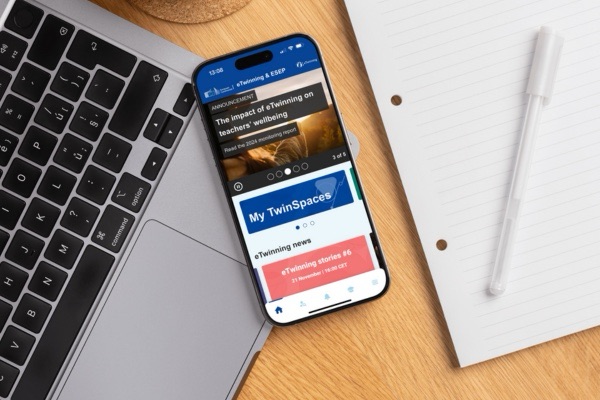
The new eTwinning and European School Education Platform app is now available

The new European School Education Platform app helps you stay up to date with all the latest news, articles, events, courses and webinars. Real-time notifications will also make it easy to stay in touch with the eTwinning community.

Explore the latest content

Browse your Home tab to discover the latest articles and highlighted courses, webinars and events. eTwinners can also access European and NSO news, along with quick links to their TwinSpaces, rooms and groups.

Connect with peers

With the partner search tool, you can easily filter through the listings to find the perfect match for your mobility activities, Erasmus+ teaching assignments, placements or job shadowing opportunities. eTwinners can also browse this section to find project ideas.

In addition, eTwinners have access to the people section – making it easy to find project partners and other eTwinners across Europe.

Don’t miss out on any updates

eTwinners can enable notifications to stay informed about changes to their projects, threads, posts, TwinSpaces or rooms, manage contact requests and access their mailbox to receive, write and reply to emails.

Learn through courses, webinars and events

The app also makes it easy to access our wide range of courses, webinars, conferences and events designed to support your professional development. You can download the app for free from Google Play and the App Store.

Additional information
  • Education type:Early Childhood Education and Care School Education Vocational Education and Training
  • Target audience ISCED:Early childhood education (ISCED 0) Primary education (ISCED 1) Lower secondary education (ISCED 2) Upper secondary education (ISCED 3)

About the authors

Editorial team

The European School Education Platform editorial team is made up of writers with wide-ranging experience in school education, communication and online media. The team works closely with the European Commission to publish editorial content on current issues in European school education and news from the eTwinning community.

Diversity and inclusion in schools: An interview with the authors – Erasmus+ Eurydice

https://eurydice.eacea.ec.europa.eu/news/diversity-and-inclusion-schools-interview-our-authors

Eurydice recently published a report on diversity and inclusion in schools in Europe. You can find the full study here.

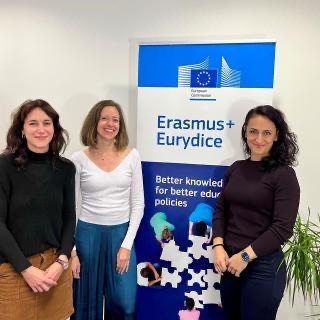
We asked the authors of the report, Sogol Noorani, Diana Antonello and Ania Bourgeois, to answer a few questions on the situation that emerges from their analysis.

Improving access and participation and promoting equal opportunities and support in education are fundamental to ensuring that no student is left behind. What are the main initiatives supporting learners who are most likely to experience disadvantage and/or discrimination across the Eurydice education systems?

Most reported national policies aim to promote access to mainstream education for students with special educational needs or disabilities. For example, as a result of amendments of the law on education in Lithuania, all general education schools will have to ensure as of September 2024 the access of students with special education and provide the necessary assistance and services, teaching tools and adaptations of the educational environment.  Another example related to improving accessibility and infrastructure can be found in Poland where, as part of an EU funded project, an ‘accessible school model’ is currently being implemented that will set standards in terms of architectural, technical, educational and social accessibility.

Policies aimed at supporting migrant, refugee, and ethnic minority students are also widespread. These are mainly support measures to help students master the language of schooling. Some countries also promote home-language teaching and interventions to address the students’ social and emotional support needs.

Furthermore, many countries have implemented or strengthened measures that ensure financial support for students from disadvantaged socioeconomic backgrounds to cover various school-related expenses, including school materials, transportation, and meals. This may also involve collaboration with social services.

Which groups receive most attention in the existing policy frameworks and in which areas do we need to invest more focus and dedication?

Students with special educational needs or disabilities are the main target group in all areas investigated in the report – data monitoring, strategic policy frameworks, policies promoting access and participation, national curricula, learning and social-emotional support policies, and teacher education and training. Nevertheless, the data on enrolment rates in mainstream education for learners with officially recognised special educational needs reveals considerable disparities across European countries. Therefore, continued efforts are needed to promote equal access to and inclusion of all students in mainstream settings.

Moreover, additional areas that require further attention relate to tackling gender stereotypes and combating bullying and discrimination of LGBTIQ+ and religious minority students. These target groups and areas of intervention are least frequently covered by national policies and measures presented in our report. Therefore, there is a pressing need for greater emphasis on these critical issues.

Are diversity and inclusion considered in school curricula and are teachers prepared and trained to face these challenges?

All education systems report that diversity and inclusion are considered in their curricula, either as a general principle or aim, through specific subjects such as citizenship education, ethics or history, or through cross-curricular areas such as intercultural education. Moreover, around half of the education systems report reforms within the last five years to further strengthen these dimensions.

Education authorities across Europe widely promote teacher education and training on issues related to diversity and inclusion. However, participation rates in some of these training programmes tend to be low, and teachers report concerns over a lack of preparedness to effectively manage inclusive classrooms.

Another area of concern is related to ensuring the necessary financial resources to employ educational support staff in schools. This dedicated staff can play a crucial role in providing immediate support to students facing any challenges or barriers to their education and development.  They can effectively assist schools and teachers in providing inclusive education.

Based on the report’s findings, what should be the focus when addressing discrimination and disadvantages in schools?

The report shows that despite numerous, relevant and recent policy developments aimed at combating discrimination and disadvantages in schools, we still need to advance on creating truly inclusive education systems, structures and policies. Such systems should avoid a reductionist approach with a focus on some groups of learners over others or addressing only certain intervention areas. Promoting diversity and inclusion in education means enabling all learners, regardless of their personal and social characteristics, to learn together while ensuring that they have access to the specific support measures they require.

Author: Anna Maria Volpe

Latest News and Articles

Poland: New team of experts to boost climate education 

The Polish Minister of Education has set up a team of climate education experts with representatives of climate organisations, academics, teachers and local authorities to 

Shaping the future: The EU’s long-term budget plan and how you can contribute

Eurydice Voice 2025

Find here the 2025 Eurydice Voice newsletters:

.

TCA Athlone – Empowering Non-Traditional Adult Educators to Unlock the Full Potential of Erasmus+!

 Athlone, Irlanda  

Scadenza: 14/03/2025 Seminario internazionale 

Seminario tematico internazionale TCA  
“Empowering Non-Traditional Adult Educators to Unlock the Full Potential of Erasmus+”
Athlone, Irlanda, 13-16 maggio 2025
Scadenza candidature: 14 Marzo 2025

L’Agenzia nazionale Erasmus+ Indire seleziona 3 partecipanti residenti in Italia per il seminario TCA “Empowering Non-Traditional Adult Educators to Unlock the Full Potential of Erasmus+!” che si svolgerà a Athlone, Irlanda, dal 13 al 16 maggio 2025, organizzato dall’Agenzia nazionale Erasmus+ irlandese (IE01 – Léargas).

Tematiche e obiettivi dell’evento

Questo seminario transnazionale ha l’obiettivo di coinvolgere i formatori nel settore Educazione degli Adulti (EDA) che operano in contesti di apprendimento non formale o informale e che trovano difficoltoso accedere alle opportunità Erasmus+. Educatori, manager di organizzazioni, formatori e facilitatori svolgono un ruolo cruciale nell’empowerment degli adulti, ma spesso incontrano ostacoli nell’accedere a opportunità internazionali. L’evento è pensato per aiutarli a superare queste barriere, offrendo strumenti pratici per partecipare ai progetti di mobilità Erasmus+, ottenere finanziamenti e ampliare il loro impatto oltre i confini locali e nazionali.

Risultati attesi

Durante il seminario, i partecipanti avranno l’opportunità di comprendere Erasmus+ in modo semplice e chiaro. Saranno supportati nell’orientarsi tra gli obiettivi del Programma, le possibilità di finanziamento e il processo di candidatura, acquisendo maggiore sicurezza nell’affrontare i primi passi. Per coloro che lavorano da soli o fanno parte di una piccola organizzazione, il seminario offrirà spunti su come valorizzare il proprio operato, trasformandolo in un progetto Erasmus+ efficace. Verranno fornite strategie pratiche per adattare le opportunità del Programma al contesto educativo specifico, rendendole realmente utili per gli studenti. Inoltre, sarà un’importante occasione per ampliare la propria rete professionale: i partecipanti potranno entrare in contatto con altri educatori con esperienze simili, condividere idee e costruire nuove collaborazioni per sviluppare progetti futuri insieme.


Informazioni pratiche 

Luogo:  Athlone, Irlanda – la sede dell’evento verrà comunicata successivamente
Data: 13 – 16 Maggio 2025  
Numero partecipanti: 50 persone tra partecipanti italiani e stranieri del settore dell’Educazione degli adulti
Lingua di lavoro: Inglese (livello B2) 

COFINANZIAMENTO

  • SOGGIORNO: Saranno a carico dell’Agenzia Nazionale irlandese, organizzatrice della TCA, le spese relative all’organizzazione del seminario e al soggiorno dei partecipanti per i giorni di svolgimento dell’attività (ovvero, le notti del 13-14-15/05/2025 e i pasti compresi dal pranzo del 13/05/2025 al pranzo del 15/05/2025).
  • VIAGGIO: L’Agenzia Nazionale Erasmus+ INDIRE assegna un cofinanziamento, pari al 95% delle spese effettuate per il viaggio che verrà erogato a seguito della presentazione di un rapporto finale da parte del beneficiario.
  • SPESE AGGIUNTIVE: Per le eventuali spese di soggiorno per i giorni di permanenza aggiuntivi sono ammissibili eventuali spese richieste opportunamente motivate relative ad un giorno di viaggio immediatamente prima della data di inizio delle attività (12/05/2025) e un altro immediatamente successivo al giorno di conclusione del seminario (17/05/2025).


Come partecipare

Scaricare il bando

Modulo per la candidatura

Per candidarsi è necessario compilare il modulo in lingua inglese o in italiano e inviarlo: 

  • Tramite raccomandata da spedire all’indirizzo: Agenzia Nazionale Erasmus+ Indire Via Cesare Lombroso 6/15 50134, Firenze
  • a mezzo PEC: erasmus_plus@pec.it

 Scadenza per l’invio della candidatura: entro e non oltre le ore 23.59  del 14 Marzo 2025

Informazionitcaerasmus@indire.it

A Union of Skills to equip people for a competitive Europe – @EUErasmusPlus

https://ec.europa.eu/commission/presscorner/detail/en/ip_25_657

The Union of Skills will support the development of our Union’s human capital to strengthen EU competitiveness. A key initiative of the first 100 days of this Commission, the Union of Skills will:  

  • Deliver higher levels of basic skills, for example through the Basic Skills Support Scheme pilot;
  • Provide lifelong opportunities for adults to regularly upskill and reskill, for example through a Skills Guarantee pilot;
  • Facilitate recruitment by businesses across the EU, for example through a Skills Portability Initiative;
  • Attract and retain the skills and talents needed in the European economy, for example through the ‘Choose Europe’ action to attract top talent globally;
  • Have a strong governance foundation, building on the new European Skills High-Level Board that will be informed by a European Skills Intelligence Observatory.

From children at school to those reaching retirement, this initiative will empower people across Europe with the skills they need to thrive. It will also encourage the portability of skills across the continent through the free movement of knowledge and innovation.

The Union of Skills Communication is accompanied by an Action Plan on Basic Skills and a STEM Education Strategic Plan to improve skills in science, technology, engineering, and maths, promote STEM careers, attract more girls and women, and boost preparedness in the face of digital and clean-tech transitions.  

New targets for 2030

The Commission proposes a number of new targets by 2030:

  • The share of underachievement in literacy, mathematics, science and digital skills should be less than 15%, whereas the share of top performance in literacy, mathematics and science should be at least 15%;
  • The share of students enrolled in STEM fields in initial medium-level VET should be at least 45%, with at least 1 out of every 4 students female;
  • The share of students enrolled in STEM fields in third-level education be at least 32%, with at least 2 out of 5 students female;
  • The share of students enrolled in ICT PhD programmes should be at least 5%, with at least 1 out of every 3 students female.

Building a solid foundation through education and training

Education and training play an essential role in creating quality jobs and lives, for example we will support literacy, maths, science, digital and citizenship skills through the Basic Skills Support Scheme pilot. Together with Member States, the Commission will develop and financially support a framework of effective intervention measures (such as early warning, monitoring, personalised support, networks). This scheme for children and young people that struggle to acquire basic skills will improve their achievement levels.

Regular upskilling and reskilling as the new norm

Developing new skills should be a recurring and essential part of peoples’ professional lives in our evolving economies.

The Commission will develop a Skills Guarantee pilot . This scheme will offer workers involved in restructuring processes, or at risk of unemployment, the opportunity to develop further their careers in another company or another sector.

The EU will streamline and reinforce the EU Skills Academies that deliver the skills needed by businesses for the green transition and the Clean Industrial Deal.

Helping the free movement of skilled people

The Single Market’s full potential will be unlocked by circulating skills. To open up more opportunities for workers and businesses, a Skills Portability Initiative will make it easier to recognise and accept skills and qualifications across the EU, independently of where they were acquired. The initiative will promote the use of digital credentials.

Making the EU a magnet for talent

The Union of Skills will bolster the EU’s ability to attract, develop and retain key talents, from inside the EU and around the world.

For example, the Commission will launch a Marie Skłodowska-Curie Actions pilot call ‘Choose Europe’ with a budget of €22.5 million to attract top talent globally, by offering excellent scientific working and employment conditions and careers prospects.

Furthermore, once adopted by the Parliament and Council, the Commission will set up an EU Talent Pool for recruitment from outside the EU at all skills levels, especially in occupations facing severe shortages. A Visa Strategy will be presented this year to further support the arrival of top students, trained workers, and researchers.

Strong new governance

Delivering on the Union of Skills will require a collective responsibility and increased ambition, investment, and effective reform implementation. For this, the Union of Skills will rest on a strong governance, informed by a European Skills Intelligence Observatory. The observatory will provide data and foresight regarding skills and allow for early warning alerts regarding skills shortages in critical or strategic sectors.

A new European Skills High-Level Board, will bring together education and training providers, business leaders and social partners to provide comprehensive insights on skills to the EU policy makers. Building on the Observatory the Board will ensure a coordinated vision and the identification of the bold action necessary to strengthen our human capital.

Because human capital, education and skills are a core matter for ensuring European competitiveness, the Commission intends to introduce a new EU-27 Recommendation on education and skills in the European Semester cycle, to guide the Member States and relevant actors.

For More Information

A Union of Skills (Communication)

Union of Skills website

Questions & Answers

Union of Skills factsheet

Skills development, labour and skills shortages – factsheets for all 27 Member States (Cedefop)

Action Plan on Basic Skills

STEM Education Strategic Plan

Action Plan on Basic Skills factsheet

STEM Education Strategic Plan factsheet

My Erasmus: la nuova piattaforma di gestione per i beneficiari Erasmus+ INDIRE

A cura di

Alessia Ricci
Ufficio comunicazione
Agenzia nazionale Erasmus+ Indire

L’Agenzia nazionale Erasmus+ INDIRE ha adottato la piattaforma MyErasmus.

MyErasmus è il nuovo canale di gestione di INDIRE per il Programma Erasmus+ e di comunicazione verso i candidati e i beneficiari, comprese le comunicazioni ufficiali dell’Agenzia relative all’esito delle candidature presentate dagli Istituti e organizzazioni.

La piattaforma è dedicata ai tre settori di gestione INDIRE: istruzione scolastica, istruzione superiore, educazione degli adulti.

Con questo servizio INDIRE intende agevolare e semplificare gli aspetti gestionali e i flussi comunicativi tra Agenzia nazionale e beneficiari.

La registrazione alla piattaforma di gestione MyErasmus sarà obbligatoria, altrimenti non sarà possibile ricevere comunicazioni ufficiali da parte dell’Agenzia.

A tal fine, verrà inviato apposito invito alla registrazione ai soggetti interessati – ossia indicati come Rappresentante Legale e Contact Person nei moduli di candidatura presentati nell’ambito della Call 2025 – così da avviare le procedure di registrazione.