Il TEAL, Technology Enhanced Active Learning – Tecnologie per l’apprendimento attivo, è un approccio sviluppato presso il Massachusset Institute of Technology per l’insegnamento delle materie scientifiche, ma è ora applicato a tutte le aree disciplinari.
Focus del processo di insegnamento e apprendimento non è il contenuto in sé ma il percorso dell’acquisizione delle conoscenze che vede lo studente come parte attiva nella costruzione del proprio sapere.
L’impostazione collaborativa e laboratoriale di questa metodologia prevede un setting d’aula a isole e la suddivisione dell’attività in fasi:
dall’attivazione, con la presentazione del problema alla classe,
alla produzione di riflessioni nel lavoro di gruppo, all’elaborazione dei risultati raggiunti tramite confronto tra gruppi,
alla chiusura e sintesi del percorso da parte del docente.
Questo approccio si serve della tecnologia a più livelli:
sul piano cognitivo, perché consente di migliorare la comprensione di fenomeni complessi con presentazioni interattive di immagini e video, risorse in 3D, simulazioni;
sul piano organizzativo perché permette di condividere materiali e artefatti digitali creati durante il lavoro in classe o a casa;
sul piano comunicativo perché consente al docente di seguire in tempo reale il lavoro degli studenti e di fornire un feedback immediato, orientare gli interventi, e personalizzare l’intervento didattico.
Parole chiave: Teal, aula flessibile, attività laboratoriale, collaborazione in piccolo gruppo, presentazione dello studente
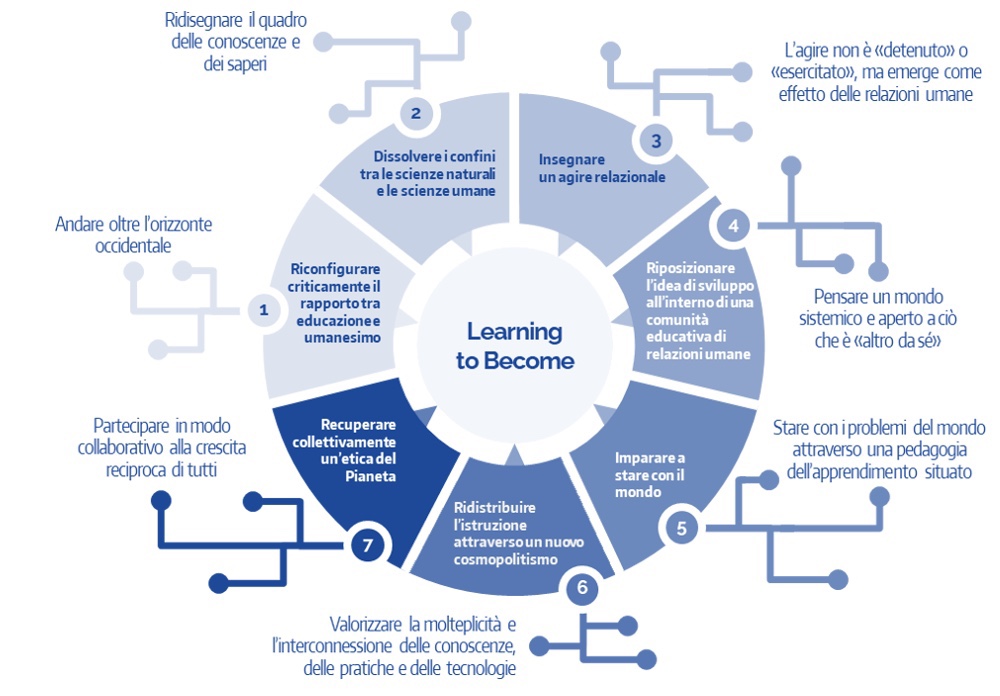
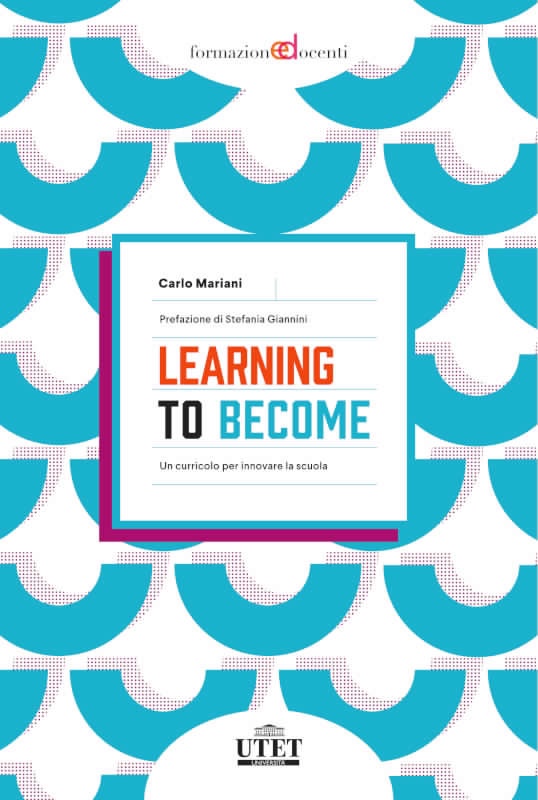
Il programma Learning to Become, “contenitore di paradigmi generativi capace di ridefinire il perimetro del pensiero critico, della coscienza globale e dell’intelligenza sociale attorno ad alcuni cluster del curricolo: i saperi, le conoscenze e le competenze; le relazioni umane e la comunità educativa; il rapporto della scuola con il mondo, con la natura, con le tecnologie, con i beni comuni, con lo sviluppo sostenibile.” è stato ideato ed è attualmente coordinato dal prof. Carlo Mariani
Il programma Learning to Become, “contenitore di paradigmi generativi capace di ridefinire il perimetro del pensiero critico, della coscienza globale e dell’intelligenza sociale attorno ad alcuni cluster del curricolo: i saperi, le conoscenze e le competenze; le relazioni umane e la comunità educativa; il rapporto della scuola con il mondo, con la natura, con le tecnologie, con i beni comuni, con lo sviluppo sostenibile.” è stato ideato ed è attualmente coordinato dal prof. Carlo Mariani
#Schoolsegregation happens when pupils are separated into different school communities based on ethnicity, socio-economic status, or disability. Which policies can cities & schools put into place to combat it? Read the article! 👇
School segregation is a phenomenon in which pupils who live in the same city are separated in different school communities based on their ethnicity, socio-economic status, disability or other characteristics. Cities, school systems and schools can enact policies that help combat this.
Caleb Oquendo / Pexels
Segregation can be understood as a physical and social separation of members of a marginalised group from members of non-marginalised groups and unequal access to mainstream, inclusive and high-quality services. Facilities in segregated settings provide lower-quality services.
A comparative European study of the socio-spatial dimension of educational inequality showed that higher levels of social segregation in school systems are associated with stronger relationships between socio-economic status and pupil achievement, but it is worth noting that there are major disparities between EU countries.
School segregation can be distinguished from in-school segregation by its use of catchment areas, early tracking and school admission policies as determinative factors. Residential segregation based on ethnic and socioeconomic group is a significant, but not the only factor in school segregation. Schools may pose financial, cultural or religious barriers to enrolment, and school admissions and catchment policies – often interlinked with residential segregation – may benefit some pupils over others.
Cities and school systems tackling school segregation
Cities can develop policies and tools to reduce the concentration of socially disadvantaged pupils in their schools. The European Cities Against School Segregation (ECASS) project has been designed to develop and disseminate local education policies to tackle school segregation in Barcelona, Milan and Oslo.
Their policy recommendations include:
Coordinating policies to ensure social mixing in residential areas and strategically locating schools;
Designing school catchment areas to include socially different neighbourhoods;
Planning the supply of school places to avoid oversupply;
Controlling school choice options;
Giving priority access to pupils with disabilities or learning difficulties, or who come from lower-income families;
Ensuring that policies don’t discriminate based on social, class, ethnic, linguistic, religious or gender identity/sexual orientation factors;
Emphasising the benefits of diversity and social cohesion in schools to all parents.
Addressing social and residential inequalities in urban schools
An international comparative study (2015) by the French government showed relatively high social segregation in French schools and a high concentration of social deprivation in public-sector schools. The study also aimed to identify implementable policies to improve social diversity.
In Toulouse, socially disadvantaged pupils were found to be concentrated in state schools in particular districts. An action plan included limiting transport times to 15-20 minutes, limiting class sizes and training teachers, which led to two measurable results: reducing the differences in achievements between different schools, and an overall improvement in educational outcomes.
In Paris, two policy initiatives were introduced to strengthen social diversity. The multi-school catchment area initiative aimed to tackle high segregation by socio-economic status in middle schools and merge catchment areas to rebalance their social intake; this is feasible where schools are geographically close but have contrasting social profiles. The AFFELNET school choice reform changed the way pupils were assigned to public high schools: assigning schools close to home, reducing inter-school academic stratification, and reducing parents’ avoidance of disadvantaged state middle schools.
The central objectives of the Inclusion4Schoolsproject in Albania, Bulgaria, Hungary and Slovakia were to support segregated schools in deprived regions to connect with their immediate social environments and facilitate solidarity and inclusive school communities. Its goal was to create spaces for dialogue in transformative school-community partnerships in marginalised social contexts.
This Horizon 2020-funded project produced an online portal for sharing community-centred knowledge and a platform for schools to exchange locally developed techniques and methods that have been successful in improving pupils’ educational progress.
Nell’articolo di Vittorio DELLE DONNE, 30/07/2023, in Scuola7-344:
Le dimensioni dell’inclusione
Maria Teresa Stancarone, saggista ed esperta di formazione e valutazione, attualmente Dirigente dell’Ufficio II – Dirigenti scolastici presso la Direzione Generale del personale scolastico del MIM, ha introdotto la mattinata di lavori mettendo a fuoco il concetto di povertà educativa, con il suo corollario di sfruttamento e delinquenza minorile. […]
Inclusione e dispersione: uno sguardo all’Europa
I bisogni di inclusione scolastica che caratterizzano il nostro Paese sono stati oggetto della relazione di Nilde Maloni, già dirigente scolastica, saggista ed esperta di formazione, che ha messo a confronto i nostri dati e le nostre iniziative con dati e iniziative degli altri Paesi dello spazio europeo dell’istruzione. […]
Il PNRR nella progettazione strategica per superare i divari
Sulla crucialità dell’orientamento scolastico quale strumento di innalzamento delle competenze di base e conseguente diminuzione dell’abbandono scolastico si è soffermato anche Damiano Previtali, autore di numerose pubblicazioni sulla scuola e attualmente dirigente l’Ufficio per il Sistema nazionale di valutazione al MIM. […]
La difficile strada dell’inclusione: il service learning, una possibile risposta
Rosa Stornaiuolo, dirigente scolastica, esperta di tematiche inclusive, ha chiuso la sessione di lavoro proponendo all’uditorio uno strumento da adottare immediatamente per il contrasto alla dispersione: il Service Learning, un approccio educativo che coniuga gli obiettivi di apprendimento con il servizio alla comunità, così da realizzare un’esperienza di apprendimento pragmatica e progressiva, che si intreccia con i bisogni della società. […]

 Italianistica, Didattica Innovativa, Internazionalizzazione