
School segregation is a phenomenon in which pupils who live in the same city are separated in different school communities based on their ethnicity, socio-economic status, disability or other characteristics. Cities, school systems and schools can enact policies that help combat this.
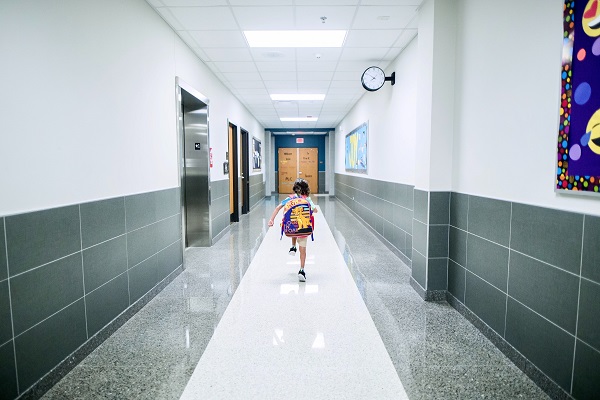
Caleb Oquendo / Pexels
Segregation can be understood as a physical and social separation of members of a marginalised group from members of non-marginalised groups and unequal access to mainstream, inclusive and high-quality services. Facilities in segregated settings provide lower-quality services.
A comparative European study of the socio-spatial dimension of educational inequality showed that higher levels of social segregation in school systems are associated with stronger relationships between socio-economic status and pupil achievement, but it is worth noting that there are major disparities between EU countries.
School segregation can be distinguished from in-school segregation by its use of catchment areas, early tracking and school admission policies as determinative factors. Residential segregation based on ethnic and socioeconomic group is a significant, but not the only factor in school segregation. Schools may pose financial, cultural or religious barriers to enrolment, and school admissions and catchment policies – often interlinked with residential segregation – may benefit some pupils over others.
Cities and school systems tackling school segregation
Cities can develop policies and tools to reduce the concentration of socially disadvantaged pupils in their schools. The European Cities Against School Segregation (ECASS) project has been designed to develop and disseminate local education policies to tackle school segregation in Barcelona, Milan and Oslo.
Their policy recommendations include:
- Coordinating policies to ensure social mixing in residential areas and strategically locating schools;
- Designing school catchment areas to include socially different neighbourhoods;
- Planning the supply of school places to avoid oversupply;
- Controlling school choice options;
- Giving priority access to pupils with disabilities or learning difficulties, or who come from lower-income families;
- Ensuring that policies don’t discriminate based on social, class, ethnic, linguistic, religious or gender identity/sexual orientation factors;
- Emphasising the benefits of diversity and social cohesion in schools to all parents.
The project provided training materials, European guidelines and information policies to improve the social and educational inclusion of vulnerable groups.
Addressing social and residential inequalities in urban schools
An international comparative study (2015) by the French government showed relatively high social segregation in French schools and a high concentration of social deprivation in public-sector schools. The study also aimed to identify implementable policies to improve social diversity.
In Toulouse, socially disadvantaged pupils were found to be concentrated in state schools in particular districts. An action plan included limiting transport times to 15-20 minutes, limiting class sizes and training teachers, which led to two measurable results: reducing the differences in achievements between different schools, and an overall improvement in educational outcomes.
In Paris, two policy initiatives were introduced to strengthen social diversity. The multi-school catchment area initiative aimed to tackle high segregation by socio-economic status in middle schools and merge catchment areas to rebalance their social intake; this is feasible where schools are geographically close but have contrasting social profiles. The AFFELNET school choice reform changed the way pupils were assigned to public high schools: assigning schools close to home, reducing inter-school academic stratification, and reducing parents’ avoidance of disadvantaged state middle schools.
Dialogue and exchange at the community level
The central objectives of the Inclusion4Schoolsproject in Albania, Bulgaria, Hungary and Slovakia were to support segregated schools in deprived regions to connect with their immediate social environments and facilitate solidarity and inclusive school communities. Its goal was to create spaces for dialogue in transformative school-community partnerships in marginalised social contexts.
This Horizon 2020-funded project produced an online portal for sharing community-centred knowledge and a platform for schools to exchange locally developed techniques and methods that have been successful in improving pupils’ educational progress.
Additional information
- Education type:Early Childhood Education and Care School Education
- Evidence:N/A
- Funding source:European Commission
- Intervention level:N/A
- Intervention intensity:N/A
- Participating countries:Albania Bulgaria France Hungary Italy NorwaySlovakia Spain
- Target audience:Government / policy maker Head Teacher / Principal Not-for-profit / NGO staff Parent / Guardian School Psychologist Student TeacherTeacher Teacher Educator
- Target audience ISCED:Early childhood education (ISCED 0) Primary education (ISCED 1) Lower secondary education (ISCED 2) Upper secondary education (ISCED 3)
Tags
Cultural diversity
Disadvantaged learners
Inclusion
Support to learners
Well-being
School subjects
Citizenship
Cross Curricular
History of Culture
Pre-School Subjects
Primary School Subjects
Social Studies / Sociology
Key competences
Cultural awareness and expression
Personal, social and learning to learn
European School Education Platform
European School Education Platform is single integrated platform for schools in Europe.
eTwinning
eTwinning is the community for schools in Europe.
- Homepage
- About
- Insights
- School & System Development
- Professional Development
- Recognition
- Networking
- eTwinning
Get in touch
Legal notices
- Terms and Conditions of Use
- Privacy policy
- Disclaimer
- eTwinning Code of Conduct
- eTwinning Privacy Policy
- Cookies
Built for the best collaboration in the community of schools. Copyright © 2021-2022 ESEP. All rights reserved.
Scopri di più da Italianistica, Didattica Innovativa, Internazionalizzazione
Abbonati per ricevere gli ultimi articoli inviati alla tua e-mail.
 Italianistica, Didattica Innovativa, Internazionalizzazione