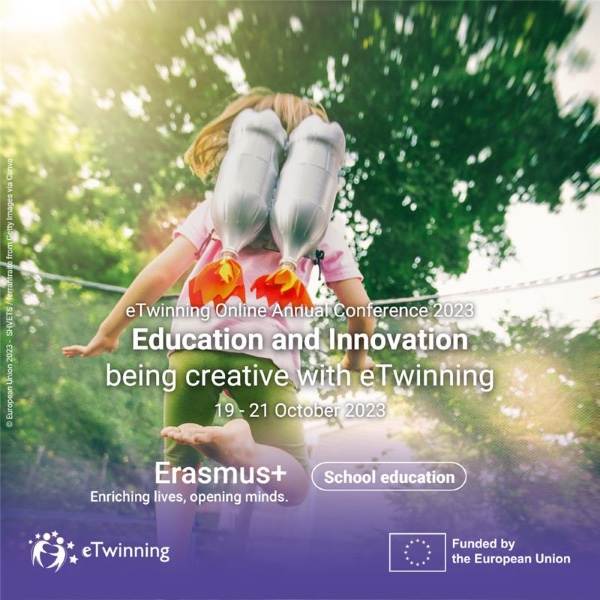
The eTwinning Online Annual Conference takes place online on 19-21 October 2023 and the first day is open to all.
In line with the Annual Theme 2023, ‘Innovation and Education’, the eTwinning Annual Conference 2023 will assist participants in imagining an innovative and creative educational setting with the support of eTwinning.
Education is central to planning, building and deploying innovative pedagogies and nurturing talents. Education also plays a key role in developing, disseminating and accrediting knowledge and innovation.
The first day of the event will be streamed online and is open to everyone.
If you are a teacher, trainer or school leader and you are interested in enhancing the quality of your teaching and your learners’ experiences through innovation and technology, join the livestream!
You can find more information on the event website.
«Siamo in un tempo di accelerazione del digitale a scuola in Italia e in Europa. Le risorse dei piani di ripresa e di resilienza dei diversi paesi membri dell’Unione Europea stanno sostenendo l’acquisto di computer, portatili, tablet, robot, visori, dispositivi di intelligenza artificiale nella prospettiva di trasformare la scuola in una ecologia di ambienti di apprendimento. La direzione del cambiamento, tuttavia, privilegia il software, le infrastrutture, le piattaforme proprietarie delle grandi imprese Ed Tech, sottovalutando i rischi sul piano democratico (tecno-soluzionismo, cessione della privacy, datafication estrattivo) di una privatizzazione asimmetrica del campo educativo. La privatizzazione asimmetrica implica, infatti, rischi di lock-in, di cessione degli spazi della scuola pubblica ai colossi della datafication, di diffusione di dispositivi alla moda, ma inadatti all’uso nella scuola con prevedibili effetti di spreco del digitale.
Questo numero intende, viceversa, 1) porsi ‘fuori dal coro’ e 2) dare visibilità alle esperienze in corso di democratizzazione del digitale nelle scuole che si svolgono sottotraccia e al di fuori delle configurazioni dominanti.
Lo scopo è documentare esperienze di ‘open education’ e più in generale di democrazia del software, delle infrastrutture, dei dati e delle piattaforme nel contesto scolastico. Si tratta di comprendere in che misura siano ancora possibili concatenazioni generative pubblico-privato tra scuola e digitale, vale a dire processi di riappropriazione in senso democratico e partnership tra scuola pubblica e mondo del privato su piccola scala, anche ‘locale’ (esempio dei tanti Moodle Partners o di altri operatori della scuola che si muovono fornendo servizi anche open retribuito). Invitiamo, pertanto, gli interessati a proporre articoli che documentano esperienze sulla seguente lista di temi:
Digitale, inclusione e disabilità,
Digitale e accesso all’istruzione,
Progettazione digitale condivisa
Digitale come bene comune;
Democratizzazione di ruolo docente-studente,
ampliamento degli ambiti di collaborazione (anytime, anywhere);
Iniziative OER (e non solo software open source) o il cui focus è stato l’uso di materiali (non solo risorse didattiche, ma anche ad esempio quelle open recuperabili su siti come Europeana) o tool non-proprietarie, anche se non open source in senso stretto (Learning Apps per esempio)»
What benefits does collaborating with special needs children bring to eTwinning projects? This session will delve into skill development for enhancing curriculum accessibility through adaptations and accommodations.
The presentation will explore strategies to enrich project activities and employ differentiation techniques, fostering inclusivity within schools that embrace European partnerships. The focus will extend to collaborative planning, experience-sharing, and the exchange of best practices. Additionally, this webinar will address overcoming obstacles to ensure the participation of all students. The webinar will also showcase two eTwinning projects: “STEAM FOR SEN” and “RECYCLING TO THE FUTURE.”
La Commissione europea ha avviato una consultazione pubblica nell’ambito del processo di valutazione del programma Erasmus+.
La consultazione aiuterà la Commissione a raccogliere le opinioni dei cittadini e delle organizzazioni su Erasmus+, sulla realizzazione e sui risultati delle novità introdotte nella programmazione 2021- 2027.
Fornirà, inoltre, indicazioni utili sull’attuazione delle misure di inclusione, sui progressi della semplificazione e chiederà ai cittadini e alle parti interessate di dare un contributo sulla resilienza del programma, sui contributi alla società e sui loro suggerimenti per il futuro di Erasmus+.
Le indicazioni e i pareri raccolti contribuiranno alla valutazione delle prestazioni complessive del programma Erasmus+ in base a cinque criteri (efficacia, efficienza, pertinenza, coerenza, valore aggiunto dell’UE).
In linea con i principi dell’UE per una migliore regolamentazione, la consultazione durerà 12 settimane, dal 15 settembre all’8 dicembre 2023, ed è disponibile in tutte le 24 lingue dell’UE.
Arriva una nuova proposta di formazione in presenza per eTwinning. Dal 16 al 18 ottobre si terrà ad Amman, in Giordania, il seminario multilaterale Utilizing 21st century skills in Education to enhance Innovation & Creativity, organizzato dall’Unità nazionale della Giordania e finalizzato alla realizzazione di nuovi progetti eTwinning in lingua inglese per l’anno scolastico 2023/2024.
L’opportunità è rivolta ai docenti che hanno voglia di mettersi in gioco e di scoprire, insieme a tanti colleghi europei e non solo, come le competenze del 21° secolo possano contribuire al miglioramento della didattica.
I Paesi partecipanti sono Albania, Azerbaigian, Belgio, Bulgaria, Cipro, Danimarca, Finlandia, Francia, Islanda, Libano, Slovacchia, e molti altri
Per la composizione della delegazione italiana, l’Unità nazionale eTwinning INDIRE selezionerà 9 docentidi scuole secondarie di primo grado di qualsiasi materia iscritti alla community da non più di due anni (cioè a partire dal 1 settembre 2021), coinvolti in non più di due progetti eTwinning. Si possono candidare docenti di qualsiasi materia
Ai docenti selezionati verranno richiesti la disponibilità a realizzare progetti eTwinning con una o più scuole partner incontrate durante l’evento e l’impegno a divulgare quanto appreso durante la formazione nel proprio istituto. Fra gli ulteriori criteri di selezione sono richiesti una buona conoscenza dell’inglese (lingua di lavoro del seminario), un profilo attivo, una buona motivazione e un’idea progettuale.
In base alle informazioni fornite nel modulo di candidatura, l’Unità nazionale selezionerà i docenti italiani che saranno invitati a partecipare. In generale, sarà data precedenza a chi non ha usufruito in passato di mobilità per altri eventi europei eTwinning in Italia o all’estero.
Salvo diverse disposizioni, la sistemazione in albergo e i pasti (limitatamente a quanto previsto dal programma) verranno gestiti direttamente dall’Unità italiana, sia per la prenotazione sia per il pagamento, mentre le spese di viaggio, la cui organizzazione è a cura di ciascun partecipante, saranno rimborsate al rientro, previa presentazione della documentazione in originale e in base alle regole di rimborso che saranno comunicate ai docenti selezionati.
Al termine di questa selezione saranno contattati via email soltanto i docenti selezionati e sarà pubblicata su questa pagina la lista dei partecipanti. In caso di rinunce, potrebbero essere contattati ulteriori candidati per eventuali sostituzioni.