I am pleased to share that the European Commission has launched a consultation on transparent AI systems 📝:
This initiative builds on the #AIAct, which sets transparency obligations for providers and deployers of certain AI systems;
The consultation will support the development of guidelines and a Code of Practice on transparent generative AI systems, helping ensure that people are informed when they interact with AI systems or with AI-generated or manipulated content.
👥 Stakeholders – providers and deployers, private and public sector organisations, academic and research experts, civil society, supervisory authorities and citizens – are invited to contribute by 2 October 2025.
📢 A call for expression of interest to join the creation of the Code of Practice is also open until the same date.
The European Commission will help deployers and providers of generative AI systems to detect and label AI generated or manipulated content.
This will help to ensure that users are informed when they are interacting with an AI system. To that end, the Commission has launched a consultation to develop guidelines and a code of practice on AI transparency obligations, based on the provisions of the Artificial Intelligence Act (AI Act).
The AI Act obliges deployers and providers of generative AI to inform people when they are interacting with an AI system, as well as when they are exposed to emotion recognition or biometric categorisation systems, and to content generated or manipulated by an AI system.
The Commission invites providers and deployers of interactive and generative AI models and systems as well as biometric categorisation and emotion recognition systems, private and public sector organisations, academic and research experts, civil society representatives, supervisory authorities and citizens to share their views by 2 October 2025.
The consultation is accompanied by a call for expression of interest, open until 2 October, for stakeholders to participate in the creation of the Code of Practice.
The AI Act, which entered into force on 1 August 2024, will foster responsible and trustworthy AI development and deployment in the EU. The transparency obligations will be applicable from 2 August 2026.
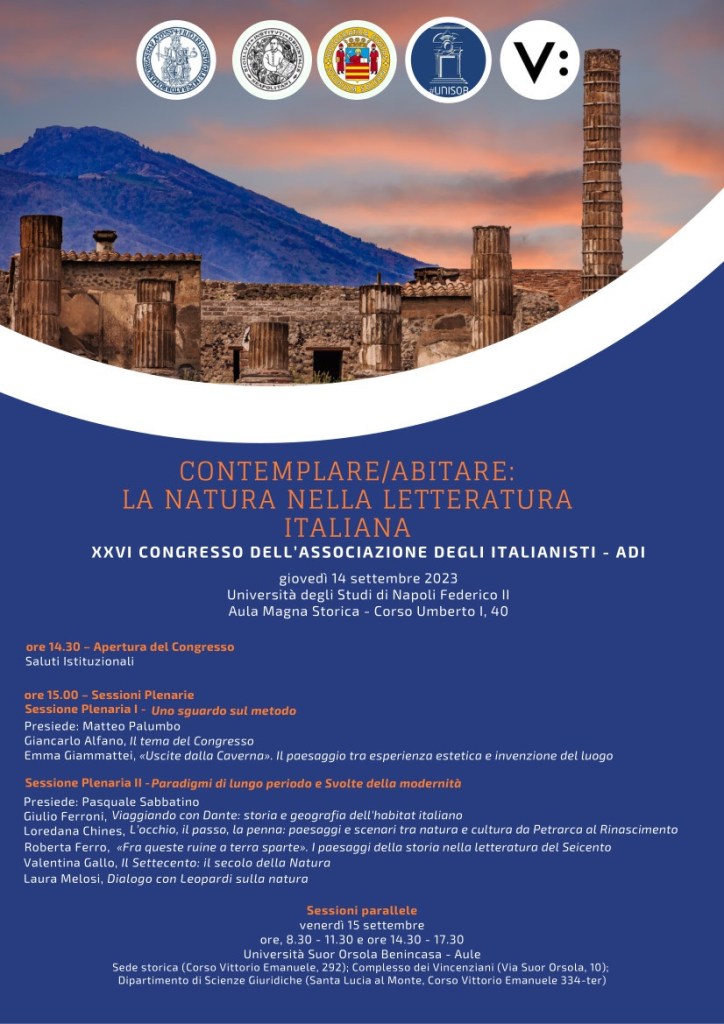
Contemplare/abitare: la natura nella letteratura italiana Atti del XXVI Congresso dell’Adi – Associazione degli Italianisti (Napoli, 14-16 settembre 2023), a cura di Elena Bilancia, Margherita De Blasi, Serena Malatesta, Matteo Portico, Eleonora Rimolo, Roma, AdI Editore, 2023
Steinernes Haus am Römerberg Markt 44, 60311 Frankfurt am Main
MOSTRA / AUSSTELLUNG
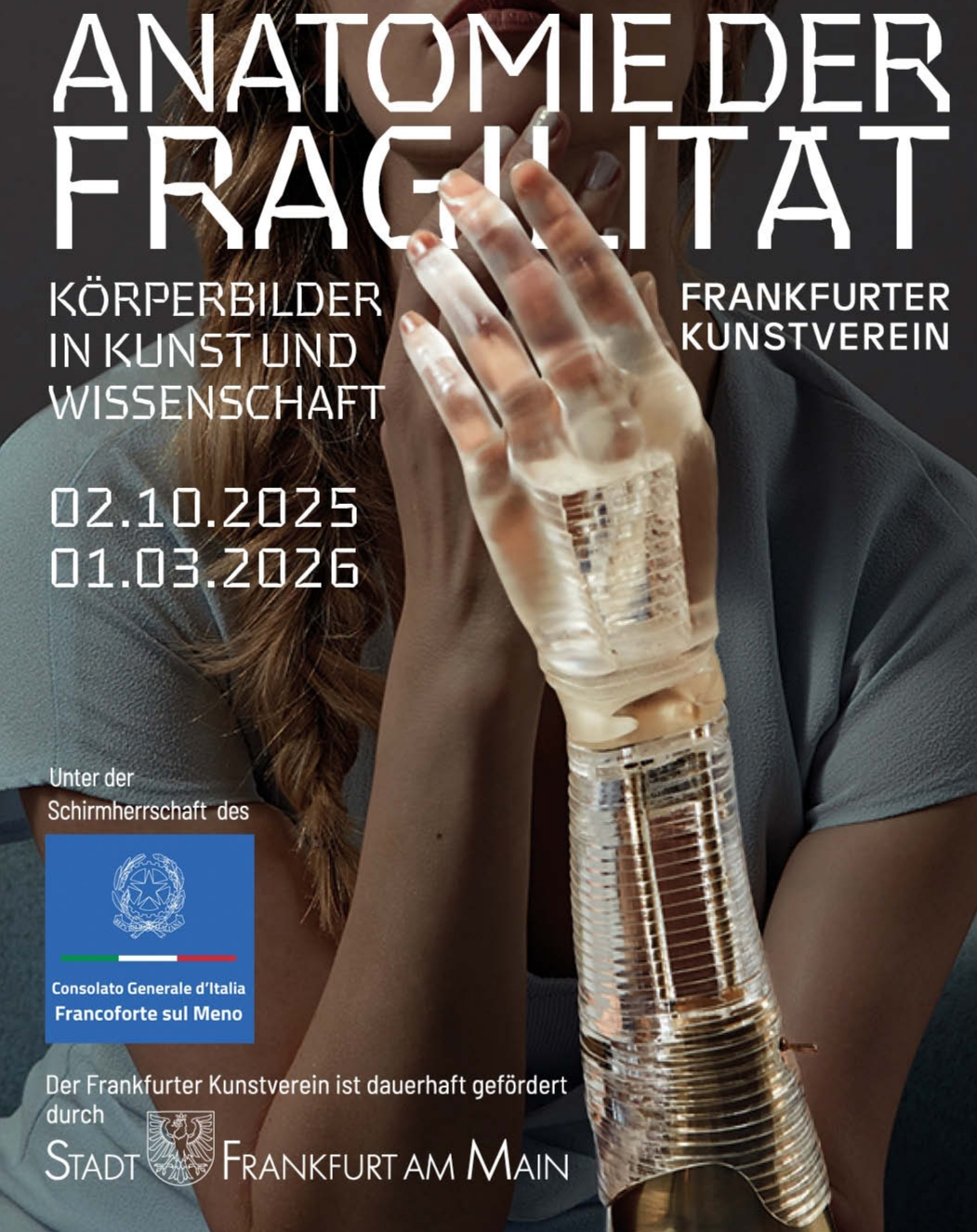
Anatomia della fragilità: immagini del corpo nell’arte e nella scienza
Anatomie der Fragilität – Körperbilder in Kunst und Wissenschaft
02.10.2025 – 01.03.2026
Gli artisti e le collezioni in esposizione/ Die Künstler:innen und Sammlungen der Ausstellung:
Agnes Questionmark (Roma – IT) Chiara Enzo (Venezia – IT) Yein Lee The Alternative Limb Project Marshmallow Laser Feast Collezione di cere anatomiche/Anatomische Wachsfiguren der Sammlungen “Luigi Cattaneo” und Museum Palazzo Poggi, Universität Bologna Collezione/Antikensammlung und Skulpturensaal der Goethe-Universität Frankfurt Collezione/Antikensammlung der Justus-Liebig-Universität Gießen Clinica/Klinik für Dermatologie, Venerologie u. Allergologie; Universitätsmedizin, Goethe-Universität Frankfurt Collezione/Sammlung Hans und Benedikt Hipp
Una mostra ideata e curata da/Kuratiert von Franziska Nori, Anita Lavorano, Pia Seifüßl und Angel Moya Garcia
Il modo in cui le persone guardano, percepiscono e rappresentano il corpo è in continua evoluzione. Da sempre l’arte e la scienza raccontano storie sull’umanità attraverso immagini del corpo. Nel corso delle epoche sono nate continuamente nuove immagini e interpretazioni del corpo.
La mostra intreccia oggetti provenienti da diversi ambiti e periodi: dalle rappresentazioni idealizzate del corpo nell’arte greca arcaica alle offerte votive religiose come richieste di guarigione, dalle spettacolari figure anatomiche in cera del XVIII secolo alle più recenti immagini della ricerca medica, in cui si viaggia virtualmente attraverso un cuore che batte.
La mostra contrappone tutto questo alle opere di artisti contemporanei che esprimono un mutato senso di fisicità, la sua reinterpretazione e la richiesta di una nuova immagine dell’individuo.
Die Art und Weise, wie Menschen Körper betrachten, wahrnehmen und darstellen ist im ständigen Wandel. Kunst und Wissenschaft haben seit jeher mit Bildern von Körpern Geschichten über das Menschsein erzählt.
Im Wandel der Epochen entstanden immer wieder neue Körperbilder und Deutungen. Die Ausstellung verwebt Objekte aus unterschiedlichen Bezugsfeldern und Zeiten: von den idealisierten Körperdarstellungen der archaisch-griechischen Kunst über religiöse Votivgaben als Bitten um Heilung sowie spektakuläre anatomische Wachsfiguren aus dem 18. Jahrhundert bis zu neuesten Bildern der medizinischen Forschung, bei denen wir virtuell durch ein schlagendes Herz reisen.
Die Schau stellt all dies den Werken zeitgenössischer Künstler:innen gegenüber, die ein verändertes Gefühl der Körperlichkeit, deren Umdeutung und den Ruf nach einem neuen Menschenbild zum Ausdruck bringen.
La mostra riflette la visione e l’orientamento programmatico del Frankfurter Kunstverein, che considera l’arte contemporanea e le scienze come forme espressive equivalenti della sete di conoscenza umana e della ricerca di senso.
Sono stati per questo invitati a collaborare: l’Università J.W. Goethe di Francoforte, con i suoi reperti provenienti dalla collezione di antichità e dalla sala delle sculture, nonché dalla collezione di calchi della clinica di dermatologia, venereologia e allergologia.
L’Università di Bologna, rappresentata dalle figure anatomiche in cera delle collezioni “Luigi Cattaneo” e del Museo Palazzo Poggi, l’Università Justus Liebig di Giessen che ha dato in prestito gli oggetti votivi anatomici della collezione Ludwig Stieda provenienti dal fondo della collezione di antichità della cattedra di Archeologia classica ed inoltre la collezione privata di Hans e Benedikt Hipp, che ha contribuito anch’essa con ex voto anatomici.
La mostra “Anatomia della fragilità” vi invita a viaggiare attraverso l’interazione tra i molteplici manufatti della storia dell’umanità e le rappresentazioni attuali proposte dall’arte contemporanea.
Die Ausstellung spiegelt die programmatische Ausrichtung des Frankfurter Kunstvereins wider, bei der die aktuelle Kunst und die Wissenschaften als gleichwertige Ausdrucksformen menschlichen Wissensdrangs und der Sinnsuche befragt werden.
So haben wir zur Zusammenarbeit eingeladen: die Goethe-Universität Frankfurt – vertreten durch Artefakte aus der Antikensammlung und des Skulpturensaal sowie aus der Moulagensammlung der Klinik für Dermatologie, Venerologie und Allergologie; Universitätsmedizin –, die Universität Bologna – vertreten durch die anatomischen Wachsfiguren der Sammlungen “Luigi Cattaneo” und des Museums Palazzo Poggi –, die Justus-Liebig-Universität Gießen – vertreten durch anatomische Votive aus der Sammlung Ludwig Stieda aus dem Bestand der Antikensammlung der Professur für Klassische Archäologie – sowie die Privatsammlung Hans und Benedikt Hipp, die ebenfalls anatomische Votive beisteuerte.
Anatomie der Fragilität lädt Sie ein zu einem Streifzug durch ein Zusammenspiel von Objekten der Menschheitsgeschichte und der zeitgenössischen Kunst.
Maggiori informazioni su orari, biglietti e prossime visite guidate a questo link/ Weitere Informationen zu Öffnungszeiten, Eintrittskarten und bevorstehenden Führungen finden Sie unter diesem Link:
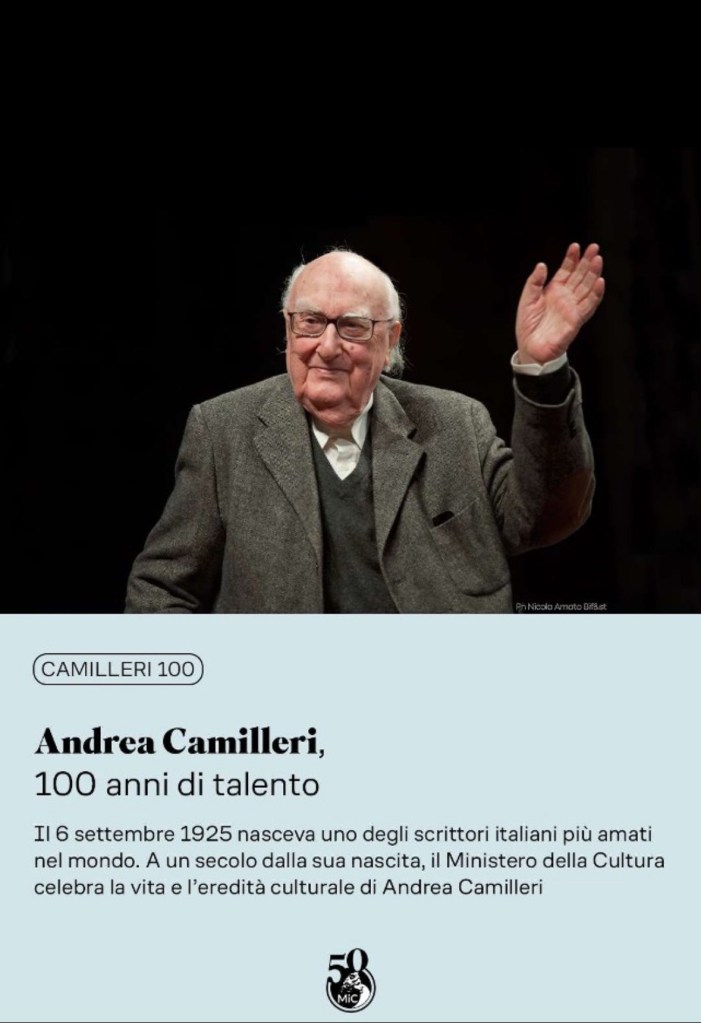
📚✨ Il 6 settembre 1925 nasceva a Porto Empedocle uno degli autori più amati della letteratura italiana e internazionale.
Scrittore, regista, sceneggiatore, Camilleri ha dato voce alla Sicilia e all’Italia intera con uno stile inconfondibile, capace di unire radici e innovazione.
Per celebrare il centenario, il Ministero della Cultura ha istituito il Comitato nazionale per le celebrazioni di Andrea Camilleri, sostenendo un ampio programma di eventi, spettacoli e incontri in Italia e all’estero.
🌍 Sei uno studente Erasmus in partenza per l’anno accademico 2025/2026?
✈️ Oppure sei uno studente internazionale che studia — o studierà — all’estero nel primo semestre 2025/2026?
🎯 Ti piace raccontare storie e ti appassiona il giornalismo?
Allora garagErasmus Foundation e Gruppo SAE ti aspettano per ErasMAG, il primo magazine scritto dagli studenti Erasmus per gli studenti Erasmus.
💡 Diventa Erasmus Reporter: racconta la tua esperienza, dai dritte utili a chi partirà dopo di te, migliora le tue capacità di scrittura e partecipa a un evento di formazione con veri giornalisti a Pavia il 14 e 15 ottobre 2025!
📅 Hai tempo fino al 14 settembre 2025 per candidarti. 📎 Non lasciarti scappare questa occasione, leggi l’articolo e partecipa: https://tinyurl.com/erasmag25
EN 🌍 Are you an Erasmus student about to leave for your host country in the 2025/2026 academic year?
✈️ Or an international student who is studying — or will study — abroad during the first semester of 2025/2026?
🎯 Do you love storytelling and have a passion for journalism?
Then the garagErasmus Foundation and Gruppo SAE are looking for you to join ErasMAG, the first magazine written by Erasmus students, for Erasmus students.
💡 Become an Erasmus Reporter: share your experience, give useful tips to future students, improve your writing skills, and join a training event with professional journalists in Pavia on 14–15 October 2025!
This course will offer the right tools and equipment to teachers to implement EU core values meaningfully in subjects and throughout school life.Last updated:
Through this course we seek to provide both theoretical knowledge and practical tactics to enable teachers to promote values such as democracy, human dignity, freedom, equality, rule of law, and human rights. Designed for multicultural and diverse classroom settings, it combines foundational theory with hands-on methods that can be applied across subjects and school activities.
Participants will deepen their understanding of EU values, examine their applicability to day-to-day life, and acquire tools for promoting critical thinking and democratic participation. The course will provide ready-to-use examples, case studies, and creative exercises for direct application in the classroom.
To support learning, the course encourages peer exchange, reflective dialogue, and active engagement, mirroring the very values it aims to promote.
Participants will be guided in adapting these principles to their unique teaching environments, ensuring meaningful and lasting impact.
Learning objectives
By the end of the course, participants will be able to:
Define and explain the core EU values and their relevance in education.
Identify opportunities to embed EU values into various subject areas and school activities.
Facilitate open discussions and critical thinking around controversial issues.
Promote active citizenship and student participation through classroom and school-wide initiatives.
Develop and present a personal integration plan for applying EU values in their professional context.
Methodology & assessment
The course is offered as an asynchronous course with flexibility in regard to when and where participants follow the course content and join the course activities. Modules open each week and remain open for the duration of the course, with a final deadline in place for the submission of a course product. Participants are required to actively contribute to the course activities by sharing their work and submitting a course product. This product is submitted, and peer assessed by three peers in the final module of the course.
Certification details
Upon successful completion of the course, a digital course certificate is awarded. The certificate shows the name of the learner and key course details such as the estimated learning hours, the learning objectives, and a link to the course homepage.
Target audience type: TeacherHead Teacher / Principal Teacher Educator
Learning time: 15-20 hours
TCA #ScuolaErasmus+
🇪🇺 L’Agenzia nazionale Erasmus+ Indire seleziona 4 partecipanti residenti in Italia per il seminario TCA “Empowering Young Voices- The Erasmus+ Schools’ Journey to Active Citizenship” che si svolgerà a Dublino, Irlanda, dal 19 al 21 novembre 2025, organizzato dall’Agenzia nazionale Erasmus+ irlandese (IE01 – Léargas).
ℹ️ Questo seminario di contatto transnazionale ha l’obiettivo supportare le scuole secondarie nel valorizzare il ruolo della mobilità Erasmus+ come strumento per rafforzare il coinvolgimento attivo degli studenti nella vita democratica.



 Italianistica, Didattica Innovativa, Internazionalizzazione