
https://ec.europa.eu/stories/schengen-40-years/
https://commission.europa.eu/index_en
40th anniversary of the signing of the Schengen Agreement
https://ec.europa.eu/stories/schengen-40-years/
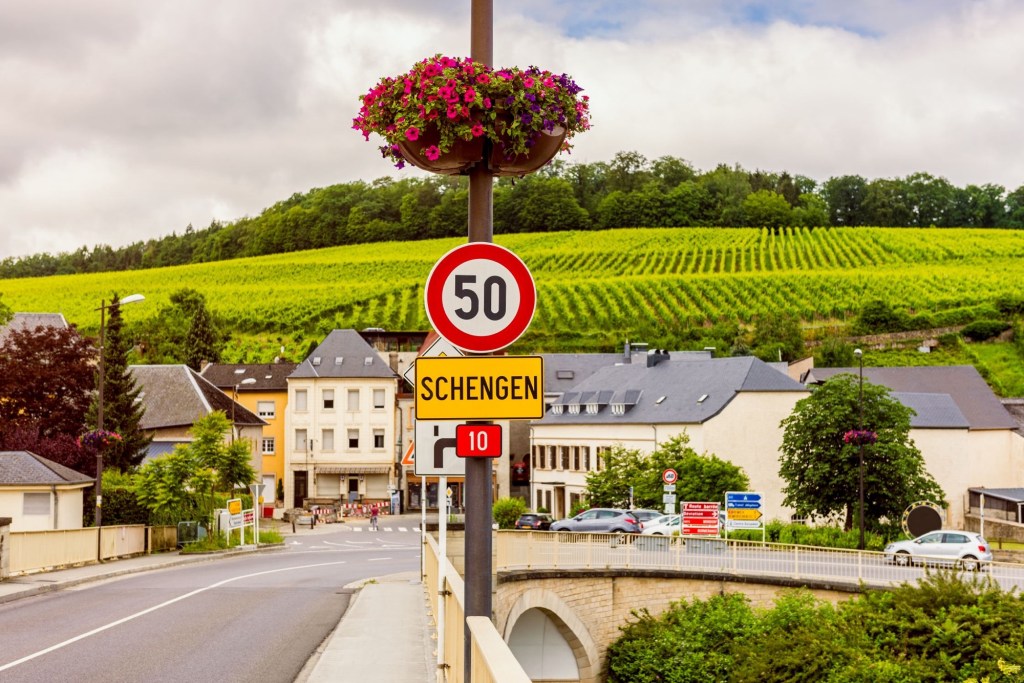
On 14 June 1985, Belgium, France, Germany, Luxembourg and the Netherlands came together in the town of Schengen and agreed to gradually abolish checks at their internal borders.
They signed the Schengen Agreement, allowing for the free movement of people, goods, and services amongst themselves.
Today, Schengen is more than a mere symbol of mobility.
Schengen has become an integral part of the European identity and is one of the biggest success stories of European integration.
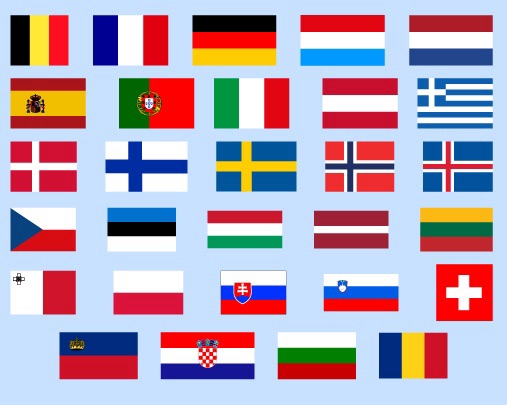
People can travel freely between Schengen countries.
Shifting border controls to our common external borders has reduced paperwork, waiting times and costs.
It has fundamentally transformed how people live, work and travel for the better.
Every year Europeans make an estimated
1.25 billion journeys
within the Schengen area.
Working together: greater security
We are safer too, thanks to Schengen.
Reducing barriers internally was accompanied by increased cooperation between police forces, customs authorities and external border control authorities, helping to make Europe more secure and reinforcing our external borders and managing migration more effectively.
This is essential to fight terrorism, organised crime and hybrid threats.
Schengen Information System (SIS) is the most widely used and largest information sharing system for security and border management in Europe and allows authorities to share and access security alerts in real time across Schengen.
https://ec.europa.eu/stories/schengen-40-years/assets/fYIBkZyuUM/11-750×570.webp
Scopri di più da Italianistica, Didattica Innovativa, Internazionalizzazione
Abbonati per ricevere gli ultimi articoli inviati alla tua e-mail.
 Italianistica, Didattica Innovativa, Internazionalizzazione

